
Nobody to Talk To? Small Steps Toward Connection | Episode 5
By Greg Shaw. A companion to The Support & Kindness Podcast with Greg and Rich. Research reviewed November 14, 2026.
What can you do when you have nobody to talk to? Start with one small request for company. Try a shared-interest group, a regular phone call, or peer support that fits your energy and access needs. For emotional distress in the U.S., call or text 988. You do not have to be suicidal to ask for support.
You pick up your phone. You look through your contacts. Then you put it down.
Maybe there is nobody you feel you can call. Maybe there are people, but they are busy. Or perhaps you are tired of saying, “I’m fine,” when you are not.
When you have nobody to talk to, you do not need a lecture about getting out more. You need a next step that fits the day you are having.
In Episode 5, Greg and Rich talk about online groups, shared interests, small outings, and places to turn when things feel hard. This companion goes further, with research, practical examples, and ways to connect when pain, disability, money, or low energy gets in the way.
Need support right now? In the U.S., call or text 988, or use 988’s online chat, for emotional distress or a mental health crisis. You do not have to be suicidal to reach out. For immediate physical danger or a medical emergency, call 911. Outside the U.S., Find A Helpline can help you find local support.
Listen to Episode 5
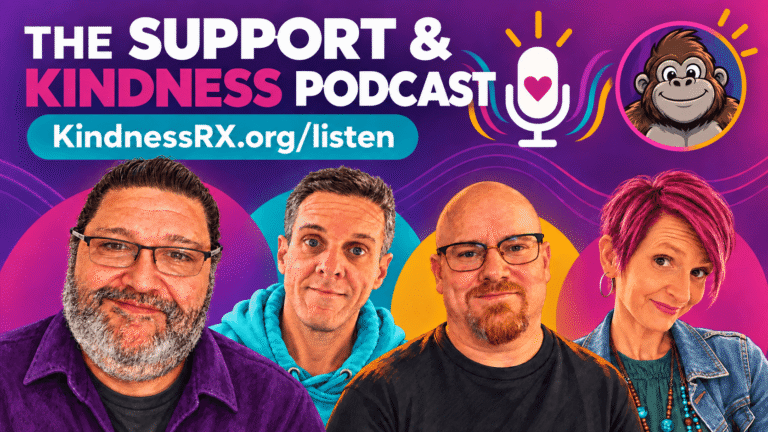
Prefer to browse? Find The Support & Kindness Podcast.
Being alone and feeling lonely are different
Some people enjoy living alone. Others feel lonely in a full house.
Social isolation describes a lack of contact, relationships, or support. Loneliness is the feeling that the connection you have falls short of the connection you need. That difference matters. A busy calendar does not always bring a sense of belonging. CDC explains the distinction here.
Ask yourself: What am I missing today?
- Someone to listen without trying to fix things?
- A bit of light chat about music, sport, or a hobby?
- Someone who understands illness, grief, or disability?
- Help getting through a difficult or unsafe moment?
Your answer can help you choose where to turn. One person or group may not meet every need.
Who experiences loneliness? What the research tells us
Loneliness is not limited to older adults. It can affect people at any age.
The World Health Organization’s 2025 report on social connection estimated that about one in six people worldwide experienced loneliness. Its pooled estimates used data collected from 2014 to 2023. Rates were highest among adolescents and young adults.
A CDC report using 2022 survey data from 26 U.S. states found:
| Group in the survey | Reported loneliness |
|---|---|
| Adults overall | 32.1% |
| Adults ages 18–34 | 43.3% |
| Adults with household income below $25,000 | 47.9% |
These figures are not estimates for every U.S. adult. The survey was based on self-reports, and its loneliness question asked about feeling socially isolated. It used a different measure from WHO, so the percentages should not be compared directly. The same CDC report found particularly high rates among bisexual and transgender respondents. Welcoming, affirming spaces matter.
A recent research update
A study published in BMC Medicine on November 10, 2026 followed 94,122 adults aged 50 and over across 18 countries, using data from 2010–2020. Both loneliness and social isolation were linked with poorer later health. Some links were stronger for people with limits in daily function, less education, or no partner.
This was an observational study. It does not prove that loneliness caused the health problems. It does reinforce why support should take practical barriers seriously.
In the recording, Greg mentions the familiar smoking comparison. That is a population-level mortality-risk comparison used in public-health messaging about social disconnection. It is not a literal measure of what one lonely evening does to your body. You do not need another reason to feel scared or ashamed. You deserve support.
“You don’t have to be alone.”
Greg Shaw, Episode 5
Start with one small request
“We should catch up sometime” can be hard to act on. A small, clear request gives the other person something they can answer.
Try this:
“I’ve had a lonely day. Do you have ten minutes for a call this week? I don’t need you to fix anything. A bit of company would help.”
Or, if talking feels like too much:
“No need to reply straight away. Could we swap a few messages when you have time?”
You can also ask for quiet company. A short video call while each person has tea or works on a hobby may feel easier than a deep talk.
Can regular calls help?
A 2021 randomized trial involved 240 Meals on Wheels clients. Over four weeks, participants who received regular calls from trained, empathetic lay callers improved on one measure of loneliness, as well as measures of depression and anxiety, compared with the control group.
It was a small, short study during the pandemic. A second loneliness measure did not show a statistically significant improvement. A phone call is not a cure, but regular contact with someone who listens can be worth trying.
Find people through something you already like
Rich talks about Reddit, Discord, and groups built around shared interests. That gives you a starting point. You can talk about the book, game, plant, or song before you talk about your life.
Possible first steps include:
- Read a few posts in a moderated hobby group before joining in.
- Ask one simple question about an interest you share.
- Try an online book club or a quiet creative session.
- Look for local or virtual events on Meetup.
Check the group’s rules and how moderators handle unkind behavior. Keep personal and financial details private. You can leave a space that makes you feel worse.
Watching a familiar video may bring comfort. Being noticed and answered can offer something different. If you have the energy, try one small exchange rather than a long scroll.
Connection when leaving home is hard
“Just go out” misses a lot. Pain, fatigue, brain injury, hearing loss, transport, cost, and access can all make a simple outing complicated.
Rich suggests being a tourist in your own city. That could mean exploring somewhere new, but it can also start from your chair.
| If this fits your day | A smaller or home-based option |
|---|---|
| Visit a library group | Ask the library about online events or telephone access |
| Meet someone for coffee | Share a ten-minute phone call over a drink at home |
| Explore a local museum | Try a virtual tour, then send someone one thing you noticed |
| Join a hobby meetup | Look for an online session you can leave early |
| Attend a support group | Ask about camera-off access, captions, and breaks |
Before an outing, check seating, toilets, step-free access, cost, and transport. Ask for what you need. Leaving early still counts as taking part.
The National Institute on Aging offers more ideas for staying connected, including regular contact and shared activities.

Connection can take more than one form. Choose something that fits your health and energy.
Try peer support without having to explain everything
Sometimes you need to speak with people who understand the part of life that has changed.
KindnessRX offers free online peer support groups for brain injury, chronic pain, and mental health. You can check the current schedule and joining details on the events page.
Peer support is a chance to share experience. It is not therapy or emergency care. Read the community guidelines and ask about access needs. Members are asked to respect privacy, but confidentiality in a group cannot be guaranteed.
You do not need a polished story. “I’m here to listen today” can be enough.
AI, social feeds, and the quiet hours
Greg and Rich discuss AI chats and NotebookLM as ways to bounce ideas around. AI might help you draft a text, think of conversation topics, or make a small plan.
It can also make mistakes. An AI response is not the same as a person choosing to listen and care. Do not rely on it for crisis support. Check privacy settings before sharing sensitive information. If using it leaves you withdrawing further from people, pause and try a human contact instead.
Rich also talks about making his social feed kinder. Greg notes that old social media memories can bring up painful feelings.
Try muting one account that leaves you upset. Add something you enjoy. You can change what you look at without pretending life is always cheerful. Platform controls vary, so check the service’s current settings rather than trusting a third-party tool with your login.
Gratitude and writing, without pressure to feel better
The episode includes gratitude jars, journaling, and messages to your future self.
If it helps, write down one small thing that made today easier. It could be a warm drink, a kind reply, or getting through a hard appointment. You can feel grateful and lonely at the same time.
For a brief journal entry, try:
- “Right now I feel…”
- “What I need most is…”
- “One person or service I could contact is…”
Stop if writing makes you feel more distressed. You do not have to turn pain into a lesson. If you want to try a future-self letter, FutureMe is one option. Check its current privacy and pricing terms. A scheduled email or private note can work too. The recording does not clearly identify the free developer-built service Greg mentions, so we have not guessed its name.

Writing is an option, not a task you have to complete.
What if nobody replies?
A silent phone can hurt. It can also leave a lot of room for harsh thoughts.
A delayed reply does not tell you what someone thinks of you. They may be working, asleep, unwell, or unsure how to respond. You are still allowed to feel disappointed.
Make a second option before you need it. That might be a warmline, a peer group, another trusted person, or a planned call later in the week. You do not have to keep checking one message all evening.
If loneliness keeps affecting your sleep, mood, or daily life, consider speaking with a health professional. Our guide to psychologists, therapists, and psychiatrists explains some of the options.
A warmline, 988, or emergency help?
A warmline usually offers listening and peer support before a crisis. Hours, eligibility, and available formats vary. Use the Warmline directory and check the service’s own details.
988 in the U.S. offers support for emotional distress and mental health crises. Call or text 988, or chat online. You do not have to be suicidal. Speak honestly about how you feel and what you need. You can ask how the service handles privacy and emergency help. No particular wording guarantees that emergency services will or will not be involved. See 988’s confidentiality information.
For an immediate medical emergency or physical danger, call 911 in the U.S. or your local emergency number. For support outside the U.S., use Find A Helpline.
KindnessRX comments, contact forms, and support groups are not monitored crisis services.
This week’s small connection challenge
Choose one option. You do not need to do them all.
- Reach out: Send one small, clear request for company.
- Show up: Join a group for ten minutes, even if you only listen.
- Make a plan: Save one support number and choose a time for a future call.
If you have room to offer support, ask someone: “Would you like company, a listening ear, or help with something?” Let them choose.
Questions people often ask
Is it normal to feel lonely when I have friends?
Yes. Having people around is different from feeling understood. It may help to ask for a specific kind of support, such as listening or a regular check-in.
Can I call 988 if I am not suicidal?
Yes. In the U.S., 988 supports people experiencing emotional distress, including loneliness. You can call, text, or use online chat.
What if I cannot leave home?
Phone calls, text exchanges, online groups, and virtual events can be starting points. Ask about captions, camera-off participation, and other access needs.
What if a group does not feel right?
You can leave and try another. One poor fit does not mean you cannot find connection. Look for clear rules, active moderation, and respect for your boundaries.
Watch, read, and keep exploring
TED and TEDx talks
- Robert Waldinger: What makes a good life? Lessons from the longest study on happiness. A TEDx talk about relationships and long-term well-being. The original study population was limited, so its story should not be treated as a representative picture of everyone’s life.
- Julianne Holt-Lunstad: Is Social Disconnection Comparable to Smoking?. A TEDx talk exploring the public-health comparison mentioned in the episode.
Research and further reading
- WHO Commission on Social Connection and its 2025 report.
- CDC: Loneliness, lack of social and emotional support, and mental health issues, 2022 data, published 2024.
- Kahlon and colleagues: Empathy-focused telephone calls trial, JAMA Psychiatry, 2021.
- Miao and colleagues: Social isolation, loneliness, and health across 18 countries, BMC Medicine, November 10, 2026; early accepted version.
- National Institute on Aging: Tips for staying connected.
Tools and communities discussed
Reddit, Discord, Meetup, NotebookLM, Tripadvisor, GoBrunch, and FutureMe. These are options to explore, not guarantees of support. Availability, access, and pricing vary. Greg’s police ride-along anecdote was historical; current local availability has not been established. The music-mashup account and feed-cleaning tool were not named clearly enough to link reliably.
More from KindnessRX
- When you feel like you have no one to talk to: a short guide for a difficult day.
- Episode 2: What to Do When You Feel Overwhelmed.
- Episode 52: When Depression Doesn’t Lift.
- Episode 57: Grief for the Life You Thought You’d Have.
- Free online support groups.
What kind of connection would help you most this week? Share only what you feel comfortable making public. You do not need to share private health details to take part.
This article shares peer perspectives and general information. It is not medical advice or a substitute for professional care. Research reviewed November 14, 2026. Illustrations are AI-generated and do not depict the hosts or actual group members.