
Episode 3: Guilt After Cancelling Plans: When Your Health Changes the Day
By Greg Shaw | The Support & Kindness Podcast | Episode 3
with Greg and Rich
You wanted to go. You meant it when you said yes.
Then the day came, and your pain got worse. Your energy dropped. Your
mind felt too full. Now you need to send the message you were hoping to
avoid.
“I’m sorry. I can’t make it.”
Guilt after cancelling plans can turn one hard day into a long
argument with yourself. You miss the event. Then you spend the evening
calling yourself a bad friend, a poor partner, or a letdown.
You can care about someone and still be unable to join them. You can
feel sad about missing out and still need to rest.
In Episode 3, Rich and I talk about that guilt, the pressure to push
through, and how honest words can help. This companion article builds on
our chat with research, message ideas, and ways to keep a connection
when plans have to change.
Listen to Episode 3
Open
Episode 3 on KindnessRX, or browse the podcast.
If you only have a minute
- Tell the person as soon as you can.
- Keep the message short and true.
- Acknowledge the change and its impact.
- Offer another option only if you have room for it.
- Give yourself the same care you would offer a friend.
Why guilt
after cancelling plans can feel so heavy
Sometimes the hardest part comes after you send the message.
You picture someone waiting for you. You think about the food they
bought or the time they set aside. You may fear that one more
cancellation will be the last invitation.
There can be loss in this, too. You may miss the life you had before
pain, illness, or a change in your mental health made everyday plans so
uncertain.
Try separating what happened from what you are saying about
yourself.
What happened: “I could not make dinner because my
symptoms got worse.”
What I’m telling myself: “I ruin everything. No one
will want me around.”
The first statement describes a day. The second turns that day into a
verdict on your whole life.
You may need to make a repair, explain a change, or find a better way
to plan. You do not have to attack yourself to do any of those
things.
The health
limits behind changed plans are real
In the CDC’s
report on chronic pain in U.S. adults, 24.3% reported
chronic pain in 2023. 8.5% reported high-impact chronic
pain, meaning pain often limited life or work activities.
[1]
The survey found chronic pain among 25.4% of women and 23.2% of men.
Rates rose with age, from 12.3% among adults aged 18 to 29 to 36.0%
among those aged 65 and older. [1]
These figures describe pain, not guilt or cancelled plans. They do
show that health limits affect a large part of the adult population.
Younger adults can have them, too.
Pain is only one reason plans change. Fatigue, anxiety, depression,
brain injury, transport problems, and places you cannot safely access
can all play a part. A limit does not have to be visible to be real.
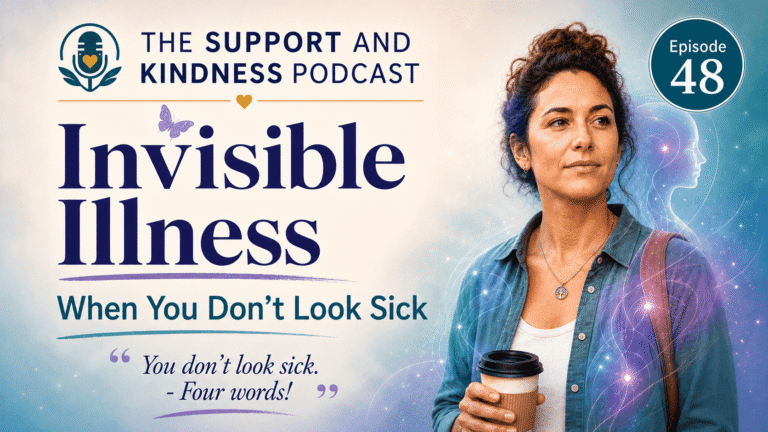
If this feels familiar, you may also find our Episode
48 conversation about invisible illness useful.
What to say when you need
to cancel
One point Rich makes in the episode stays with me: people may not
understand why you are absent unless you tell them.
You do not need to share your full medical history. A clear message
can give the other person enough information to change their own
plans.
When you need a simple
message
“I’m sorry for the change. I’m not well enough to come today. I was
looking forward to seeing you.”
When you would like to try
again
“My health has changed today, so I need to cancel. Could we check in
next week and see what works?”
That leaves room for your health to change. It also avoids promising
a date you may not be able to manage.
When you need privacy
“I need to cancel for health reasons. I’d rather keep the details
private, but I wanted to let you know as soon as I could.”
When a smaller plan might
work
“I can’t manage the outing. I might be able to do a short call
instead. Would that work for you?”
A call is an option, not a debt. Some days talking takes more energy
than you have.
When you cannot
arrange anything else yet
“I need to rest today. I don’t have a new date to offer right now.
I’ll get back in touch when I have a better sense of what I can
manage.”
Save a message in your phone. You can change a few words when you
need it. That may help on days when thinking clearly is hard.

A different kind of contact may help. Rest without a replacement
plan is also allowed.
Care for the
relationship as well as yourself
Someone can understand your health needs and still feel disappointed.
Both things can be true.
If a friend has paid for tickets or arranged childcare, acknowledge
that. Where possible, discuss a fair next step. If someone depends on
you for care, let them or a backup person know promptly so their needs
can be covered.
“I know you set time aside for this. I’m sorry it has changed. Can we
talk about a plan that gives us both more room?”
In the episode, Rich points out that we may carry guilt from several
missed plans even when each person only sees one cancellation. That can
be a helpful perspective.
But sometimes it is the same person more than once. Their hurt may be
real. A calm talk about what you can each expect may help more than
another promise to try harder.
You can take responsibility for communication without taking blame
for being ill.
Make plans that have room
to change
Before the next event, talk about what would help. You might agree
to:
- Check in on the day before anyone leaves home.
- Choose a shorter visit or a quieter place.
- Meet somewhere with seating and easy access.
- Build in breaks and a way to leave early.
- Use flexible bookings where possible.
- Let the event go ahead if you cannot attend.
For example: “I’d love to come. My symptoms vary, so I may need to
confirm that morning. Please go ahead if I can’t make it.”
Think about the full cost of the plan. Getting dressed, waiting for a
ride, travel, noise, and getting home can take as much effort as the
visit itself.
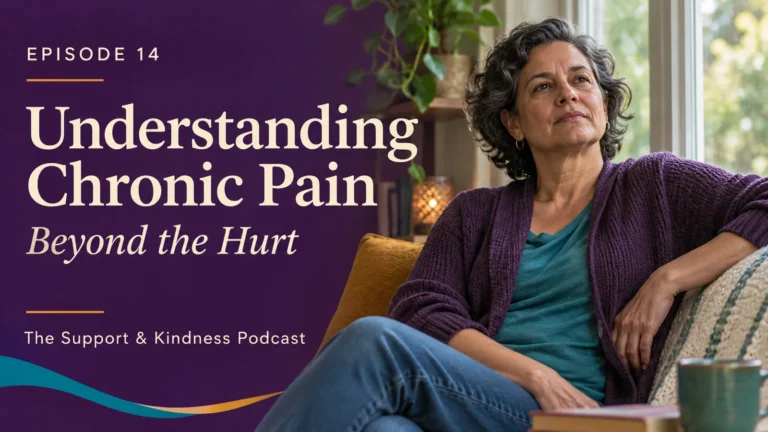
Our Episode
4 discussion of pain flare days explores another part of living with
those hard days.
A note about delayed
symptoms
For people with ME/CFS, activity can cause post-exertional malaise,
or PEM. The CDC explains
that symptoms typically worsen 12 to 48 hours after
activity and may last days or weeks. Even social contact can
trigger symptoms. [2]
So “you looked fine yesterday” does not settle what someone can
manage today. Pacing for ME/CFS means balancing activity and rest within
personal limits. A smaller outing is not always safe or manageable.
Follow a care plan that fits your condition. [2]
Shorter visits, seating, and an easy way home can make some plans
more manageable.
What does research
say about self-compassion?
Self-compassion means responding to your own struggles with care. It
leaves room to be honest about what happened and what you need next.
A small randomized trial
published in 2024 compared self-compassion training plus core
stability exercise with exercise alone for chronic low back pain.
Fifty-two people completed the one-year follow-up. The combined group
had better disability scores. [3]
That is encouraging, but it was a small study of a specific condition
and a combined treatment. It does not prove that a kind thought removes
pain or cancellation guilt. It is also not an exercise plan for
everyone.
For today, try asking: “What would I say if someone I loved had to
send this message?”
You might say: “I know you wanted to come. I’m sorry today is hard.
Let’s work out what you need.”
Try offering yourself those words, too. You do not have to feel
better at once for the words to be worth practising.
A short pause after you
cancel
- Name the feeling. “I feel guilty and
disappointed.” - State the facts. “I wanted to go. My health
changed.” - Choose one kind next step. Send the message,
arrange essential cover, or settle down to rest.
This is a simple reflection, not a tested treatment for guilt. Use it
if it helps. Leave it if it does not.
When fear keeps shrinking
your life
Sometimes rest protects your health. Sometimes fear keeps you from
things you want and could safely do. Both can happen in the same
person.
If you keep missing things because you fear being judged, or your
world is getting smaller, consider talking with a mental health
professional. NIMH
describes cognitive behavioral therapy and gradual exposure as
treatments used for social anxiety. [4]
This is not a reason to push through a pain flare, ignore delayed
symptoms, or attend a place you cannot safely access. A professional can
help you sort out the pattern while taking your physical health into
account.
If someone you love has to
cancel
Start by believing that they wanted to be there.
“Thanks for telling me. I’ll miss you. Would you like a check-in
later, or some quiet time?”
If you need to discuss repeated changes, choose a calmer time. Be
clear about your needs without asking them to prove their illness.
“I care about you, and I want to keep seeing you. Last-minute changes
are hard for me, too. Could we try plans that don’t need advance
tickets?”
Keep inviting them if they want that. Ask what makes an invitation
feel welcome rather than pressured.
This week’s kindness
challenge
Choose one small step. There is no need to do them all.
- For yourself: Save one cancellation message in your
phone. - For a relationship: Agree on a flexible backup plan
with someone you trust. - For someone else: Send a kind reply when their
plans change. Offer care without asking for proof.
What helps you when you have to cancel? What would you like people to
understand? Share only what you feel comfortable making public.
Questions people ask
Is it wrong
to cancel plans because of chronic pain?
Health needs can make cancelling necessary. Tell the person when you
can, acknowledge the impact, and discuss another option if you have room
for one. A changed plan does not define your worth.
Do I have to explain my
diagnosis?
For social plans, you can usually keep the details private. “I’m not
well enough to come” may be enough. Work, formal care arrangements, and
bookings can have different requirements.
What if I
still feel guilty after sending the message?
You do not have to make the feeling disappear before resting. Check
whether there is a practical step left to take. If there is not, try to
step away from replaying the conversation. Persistent or overwhelming
guilt is worth discussing with a professional.
What if friends stop inviting
me?
If it feels safe, tell them whether you still want invitations.
Explain what kind of plan is easier to manage. You might say, “Please
keep asking. I may have to say no, but being included matters to
me.”
Further viewing and reading
- Kristin Neff: The Space Between
Self-Esteem and Self Compassion. A TEDxCentennialParkWomen
talk about how we respond to ourselves when life is hard. - Susan David: The
gift and power of emotional courage. A TEDWomen talk about
making room for difficult feelings and choosing how to act. - Practising
self-compassion at KindnessRX. More ideas for responding to
yourself with care. - KindnessRX
resources. Further places to look for support.
The talks offer ideas for reflection. They are not clinical guidance
or proof that an approach will work for everyone.
Find support with
people who understand
You are welcome at our free
KindnessRX peer support groups. We have groups for chronic pain,
mental health, and brain injury. Visit the sign-up page for current
times and details.
You can also listen to more
episodes of The Support & Kindness Podcast.
Missing a plan can hurt. You can acknowledge that hurt, care for the
relationship, and give your health the attention it needs.
This article shares peer support and general information. It is
not medical advice. Our groups do not replace treatment or crisis care.
In the U.S., call or text 988 for
suicide or mental health crisis support. For immediate danger, call 911.
Outside the U.S., use your local crisis or emergency service.
Research and references
- Lucas JW, Sohi I. Chronic Pain and High-impact Chronic Pain
in U.S. Adults, 2023. NCHS Data Brief 518, November 2024. CDC
report. National survey estimates; not a study of cancellation
guilt. - CDC. Manage ME/CFS. May 10, 2024. Guidance.
Condition-specific information on PEM and activity management. - Zheng F et al. Long-term impact of self-compassion training
with core stability exercise on patients with nonspecific chronic low
back pain: A randomized controlled trial. Journal of
Psychosomatic Research. 2024;181:111678. PubMed | DOI. Small
combined-treatment trial; findings do not establish effects on
cancellation guilt. - NIMH. Social Anxiety Disorder: What You Need to
Know. Treatment
and support information.
Sources checked November 14, 2026. Research and practical
additions in this article extend the episode; they are not presented as
claims made during the recording.
One Comment
Comments are closed.