
Building Positive & Productive Workplaces
Kindness at work is not forced cheerfulness. It is listening, giving credit, making expectations clear, and treating people with respect when something goes wrong. It also means taking workload and boundaries seriously.
You can begin with your own interactions, but employees cannot fix unsafe or unfair working conditions through personal kindness alone. Leaders have a responsibility to listen and act.
Beyond Good Intentions: What Workers Need
The U.S. Surgeon General’s 2022 workplace well-being framework puts workers’ voices and fairness at the center. It describes five essentials: safety, connection, work-life balance, feeling valued, and opportunities to grow. Use these ideas to ask practical questions, rather than assuming kindness guarantees higher profits:
- Safety: Can people raise concerns without being dismissed or humiliated?
- Connection: Are remote, part-time, and new colleagues included in useful conversations?
- Boundaries: Are schedules, priorities, and expectations about availability clear?
- Recognition: Are contributions acknowledged fairly, including less visible work?
- Development: Can people access feedback, training, and a fair chance to progress?
Everyday Kindness: Simple Acts, Significant Impact
Building a kinder workplace starts with individual actions, practiced consistently:
- Practice Active Listening: Give colleagues your full attention in meetings and conversations. Focus on understanding their perspective before formulating your response.
Express Genuine Appreciation: Acknowledge colleagues’ efforts and contributions specifically and sincerely, both privately and publicly when appropriate. A simple “thank you” or note of recognition goes a long way. - Offer Proactive Help: Notice when colleagues seem overwhelmed and offer specific, practical assistance if you have the capacity. Share relevant knowledge or resources freely.
- Be Inclusive: Make an effort to include all team members in conversations and activities. Seek out and respect diverse perspectives.
- Respect Boundaries: Be mindful of colleagues’ time, workload, and preferred communication styles. Avoid non-urgent contact outside work hours.
- Share Credit: Acknowledge the contributions of others in team successes.
The Role of Empathetic Leadership
Leaders play a critical role in shaping workplace culture. Empathetic leaders:
- Seek to understand their team members’ perspectives and challenges.
- Show genuine care for employee well-being.
- Communicate transparently and respectfully.
- Provide constructive feedback kindly, focusing on growth.
- Actively foster psychological safety by modeling vulnerability and encouraging open dialogue.
- Support healthy work-life integration.
Ask, “What is making this work harder than it needs to be?” Then explain what can change, who will handle it, and when you will follow up. Do not invite sensitive disclosures that you are not equipped to protect or respond to.
Navigating Workplace Challenges with Compassion
Kindness is especially important when navigating difficulties:
- Giving & Receiving Feedback: Frame feedback constructively, focusing on behavior and solutions. Receive feedback with openness and curiosity.
- Managing Conflict: Address disagreements respectfully, using “I” statements and seeking mutual understanding and solutions.
Addressing Stress & Burnout: Be attuned to signs in yourself and others. Offer support and encourage utilizing resources. Practice self-compassion.
Responding to Mistakes: Focus on learning and solutions rather than blame, reinforcing psychological safety.
Fostering a Culture of Kindness Together
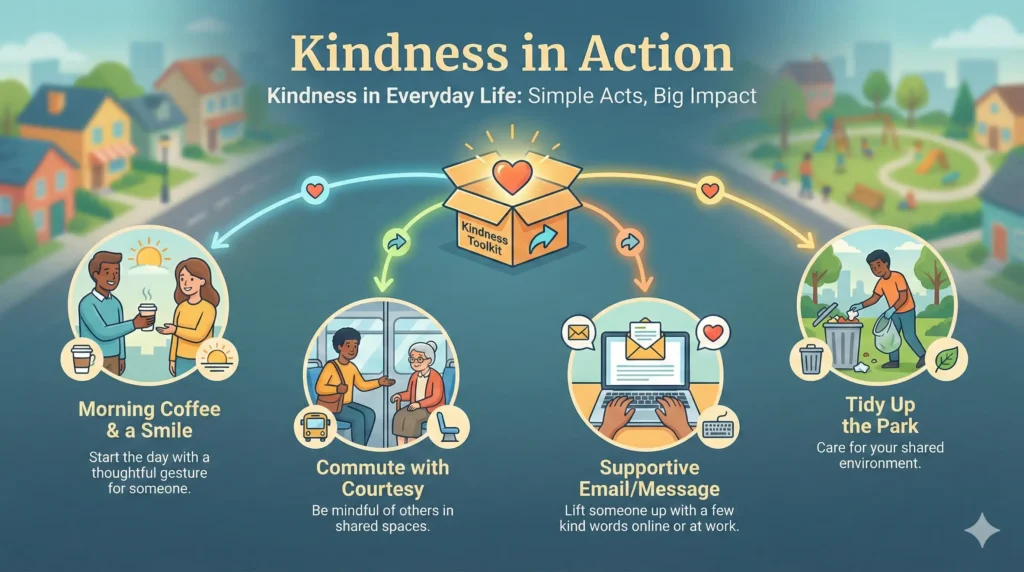
Choose one change to try this week: a clearer handover, a meeting with room for quieter voices, or specific thanks for someone’s work. Check whether it helped. For more ideas, explore our Kindness Toolkit and evidence-aware guide to the Kindness Dividend.