
Building Stronger Communities
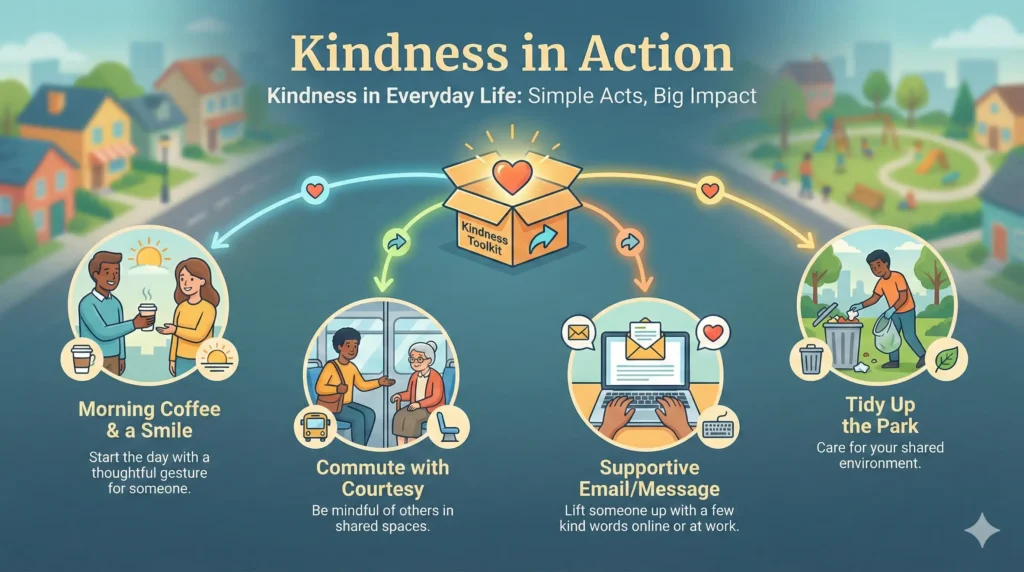
Community kindness starts close to home: a neighbor you check in on, a local project you help with, or a shared space you leave a little better. You do not need spare money or unlimited energy to take part.
Choose something useful, ask what is needed, and be clear about what you can offer. Helping should respect the other person’s privacy, choices, and independence.
Building Social Capital: The Invisible Strength of Community
Sociologists talk about social capital – the networks, shared norms (like trust and reciprocity), and mutual understanding that enable people within a community to cooperate effectively. Think of it as the invisible glue holding a community together.
Everyday acts of kindness are fundamental building blocks of social capital:
- Greeting Neighbors: Creates familiarity and connection.
- Offering Simple Help: Fosters norms of reciprocity (“I help you, you might help me or someone else”).
- Participating Locally: Builds networks and shared experiences.
A friendly gesture is not a solution to every community problem. Pair personal kindness with attention to practical needs, accessibility, and the organizations already doing the work. Explore more in The Kindness Dividend.
Volunteering & Civic Engagement: Structured Kindness
Beyond informal interactions, dedicating time and effort through structured channels makes a significant impact:
- Volunteering: Offering your time and skills to charities, schools, shelters, environmental groups, or other causes directly addresses community needs and allows you to connect with like-minded individuals.
- Civic Engagement: Participating in local governance (voting, attending meetings), joining community associations, or advocating for positive change is one way to contribute your perspective and learn what others need.
Before volunteering, ask about the role, training, safeguarding, accessibility, and time commitment. A small commitment you can keep is more useful than one that leaves you overwhelmed. You can also read about kindness and connection.
The Power of Everyday Neighborliness
Never underestimate the impact of small, consistent acts of consideration within your immediate neighborhood:
- Simple Greetings: A friendly hello or wave breaks down anonymity.
- Checking In: Ask a neighbor whether a check-in would be welcome. Let them choose what help, if any, they want.
- Mutual Support: Offer to lend a tool, collect mail with permission, or share garden produce. Agree on details before acting.
- Maintaining Shared Spaces: Return a shopping cart or join an organized cleanup. Leave hazardous waste to trained people.
Keep invitations low-pressure. A person may appreciate the offer and still prefer not to take part.
Cost
Can people join without buying anything? Be clear about any cost.
Access
Ask about transport, physical access and remote options.
Energy
Offer a shorter visit, a break or a quieter way to take part.
Choice
Make it easy to decline. Ask before sharing anyone’s story or photograph.
Ask people what works for them. Do not assume one adjustment meets everyone’s needs.
Bridging Divides with Kindness and Empathy
Many communities are beautifully diverse, but differences can sometimes lead to misunderstanding or division. Kindness, coupled with empathy and perspective-taking, is essential for building bridges:
- Seek Understanding: Practice genuinely trying to understand the perspectives and experiences of people from different backgrounds, beliefs, or circumstances.
Facilitate Positive Contact: Engage respectfully with diverse individuals, perhaps through shared community projects or events. Listen without expecting anyone to explain or represent an entire community. - Look for Common Ground: Focus on shared human values and common goals (like safe neighborhoods or good schools) to unite people across differences.
- Promote Inclusion: Speak up kindly against prejudice (if safe) and support initiatives that ensure everyone feels welcomed and valued.
Your Role in Weaving a Kinder Community
Choose one next step: ask a local organization what it needs, offer a specific favor to a neighbor, or make an event easier to attend. Consider cost, transport, physical access, and whether people need a quieter way to participate.
Find more ideas in our Kindness Toolkit, practice listening and perspective-taking, or explore our online peer support groups.