Why Embarrassing and Intrusive Memories Show Up at 3 AM
A gentle look at intrusive memories, shame, rumination, and how to be kinder to your past self
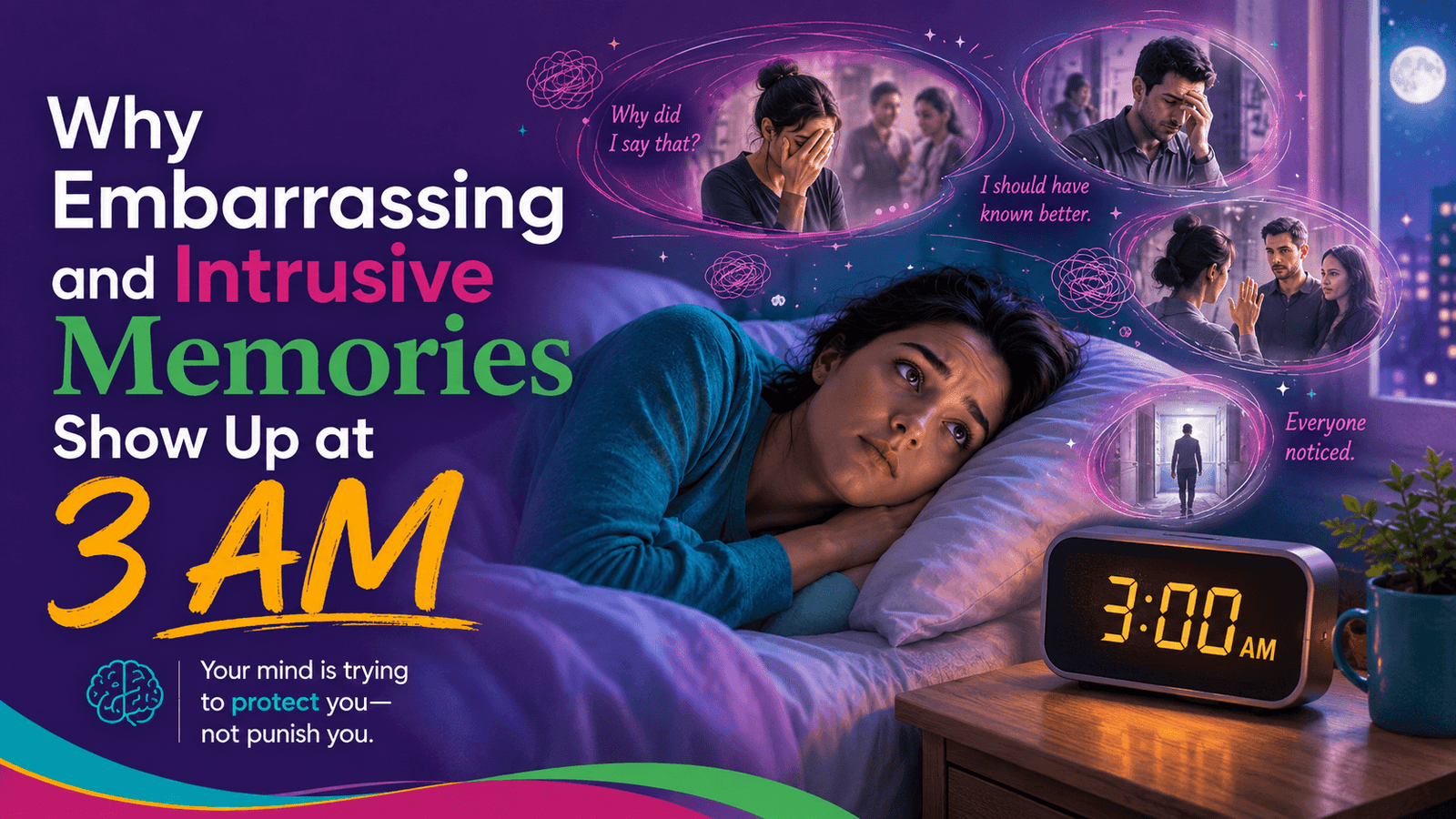
Have you ever been almost asleep when your brain suddenly decides to replay something awkward from years ago?
Maybe it was something you said at dinner. Maybe it was a mistake from school. Maybe it was an email you wish you could unsend. Maybe it was a moment that everyone else has probably forgotten, but your mind still keeps in high definition.
In Episode 34 of The Support and Kindness Podcast, Greg, Rich, Liam, Tony, and Sarah talked about why embarrassing memories can show up at night, why shame can feel so sticky, and how we can respond with more kindness when old moments come back.
The heart of the episode was simple:
You are not broken. You are not alone. That old moment does not define you.
What are intrusive memories?
Greg opened the episode by naming the experience many people know well. Some memories are voluntary. We choose to remember them, like where we parked the car or what we ate yesterday.
Other memories are involuntary. They pop in without being invited. They may be unwanted, uncomfortable, or emotionally intense. Those are often called intrusive memories.
When an embarrassing memory appears, it can feel like the moment is happening again. The body may react. The face may feel hot. The chest may tighten. The mind may start searching for what went wrong.
That does not mean something is wrong with you. It means your brain is remembering something it once tagged as important.
Why shame and guilt can feel so sticky
One of the most helpful parts of the episode was the difference between guilt and shame.
Guilt says: “I did something bad.”
Shame says: “I am bad.”
That difference matters.
Guilt is about an action. Actions can be repaired, learned from, apologized for, or handled differently next time. Shame feels deeper. Shame tries to turn one moment into a statement about your worth.
But a memory is not proof that you are bad. A memory is a memory.
Liam reflected on this difference during the conversation. He shared that learning to separate a mistake from his identity has helped him stop treating old moments as evidence that he is a bad person.
That is a kindness practice in itself: learning to say, “I made a mistake” instead of “I am the mistake.”
Why the brain holds onto old embarrassing memories at night
Greg described three parts of the brain that help explain why emotionally charged memories can feel so strong:
- The amygdala acts like an alarm system. It notices danger and marks emotionally important moments.
- The hippocampus helps file and store memories.
- The prefrontal cortex helps us pause, think, and remind ourselves that we are safe now.
When someone is stressed, anxious, depressed, in pain, living with trauma, recovering from brain injury, or short on sleep, that calming system may not feel as strong.
That may be one reason a memory that seems manageable during the day can feel much bigger at night.
Rich spoke honestly about how brain injury changed the way memories and emotions show up for him. Sometimes a memory appears during an ordinary moment and brings tears, even when it seems unrelated to what is happening around him. His response has been to be honest with trusted people rather than trying to hide it.
That kind of honesty is one of the reasons peer support group conversations matter.
Why 3 AM rumination can feel so loud
At night, there are fewer distractions. No chores. No phone calls. No daylight. No conversation.
The mind has room to wander, and if the body is already under stress, old memories may feel louder. Greg described how stress, sleep, and memory can get tangled together. The brain may scan for unresolved concerns and grab onto something it once marked as important.
Sometimes that “important” thing is not a true danger. Sometimes it is an awkward email. A social mistake. A childhood cringe moment. A conversation we wish had gone differently.
The brain may be trying to protect us, but it does not always know the difference between present danger and an old embarrassing scene.
The spotlight effect
The group also talked about the spotlight effect, which is the tendency to think other people noticed, remembered, or cared about our mistakes more than they probably did.
Tony shared that he has carried worries about things that later turned out not to be a big deal to others. He described the relief of realizing that some moments never registered with people in the way he feared.
Greg put it in a memorable way: “Our 3 AM replay is a private movie. Probably no one else has a ticket.”
That does not mean our feelings are silly. It means the old shame story may not be as public as it feels.
Four gentle tools for old shame memories and self-compassion
This episode did not offer a quick fix, and that is important. Some memories are painful. Some are connected to trauma. Some may need the care of a licensed professional.
But for ordinary old cringe memories, Greg offered four gentle tools:
1. Name it: recognize the intrusive memory
Try saying:
- “This is an old shame story.”
- “This is my brain replaying a memory.”
- “This is a memory, not a threat.”
Naming what is happening can create a little space between you and the memory.
2. Step back: reduce shame and guilt with distance
Instead of reliving the memory as if it is happening right now, try seeing it from a little distance.
You might say, “That was me at a hard moment. I was nervous. I was learning.”
Distance can help reduce the emotional charge.
3. Use the friend test: practice self-compassion
Ask yourself: “If a friend told me this same story, what would I say?”
Most of us would not tell a friend to stay awake all night attacking themselves. We would probably say something kinder:
- “You were human.”
- “You made a mistake.”
- “You are allowed to keep going.”
Then we can practice saying that to ourselves.
4. Change the channel: interrupt 3 AM rumination
Sometimes arguing with the memory only keeps the loop going. Instead, shift the brain into a different mode.
You might try grounding, gentle movement, a calm audiobook, a familiar podcast, counting backward, drinking water, or briefly getting out of bed and returning when your body feels calmer.
As Greg said in the episode, you do not have to fix your whole life at 3 AM. You only have to give your brain a safer place to land.
What the co-hosts brought to the conversation
Rich reminded us that some memories arrive with emotion before we can explain them, especially after brain injury. His honesty showed how helpful it can be to let trusted people know what is happening.
Liam talked about shame, growth, and learning from old mistakes without turning them into identity. He also shared a personal memory he has carried for decades and how self-work has helped soften it.
Tony reflected on the spotlight effect and the relief that can come when we realize other people are usually not replaying our mistakes the way we are.
Sarah brought both humor and grace. She reminded listeners that old mistakes can carry lessons without needing to become lifelong self-punishment.
Greg tied the episode together with a gentle challenge: when the memory shows up, do not fight it and do not feed it. Hold it differently.
This week’s kindness challenge
The next time an old embarrassing memory shows up, try saying:
“That’s my brain doing its job. I am safe now. That moment does not define me.”
You do not have to make the memory disappear.
You are simply choosing not to add more shame to it.
You are welcome here
If this episode resonated with you, please remember that you do not have to carry things alone.
KindnessRX hosts three free online peer-led support groups each week:
- Mondays at 1:00 PM Eastern: Brain Injury Support Group
- Tuesdays at 12:00 PM Eastern: Chronic Pain Support Group
- Wednesdays at 7:30 PM Eastern: Mental Health Support Group
These are kindness-centered peer support spaces for connection, encouragement, shared understanding, and gentle conversation.
View upcoming groups and RSVP through the Luma calendar: https://luma.com/calendar/cal-oyT0VPlVTKCPxBw
Listen to the full episode of The Support and Kindness Podcast on Spotify or YouTube.
For support groups, podcast episodes, kindness reflections, and encouragement, visit: https://kindnessrx.org
Disclaimer: KindnessRX content and support groups are intended for encouragement, education, and peer/community support. They are not a substitute for professional medical, mental health, legal, or crisis care. If you are in immediate danger or crisis, please contact emergency services or a crisis hotline in your area.