Episode 25: How the News Affects People With Depression and Anxiety

News anxiety can leave you tense, low, distracted, or unable to switch off. Repeated distressing coverage is linked with poorer mental health in some studies. You can try smaller news windows, fewer general alerts, trusted sources, and time to recover. Keep essential safety updates, and seek support if symptoms persist.
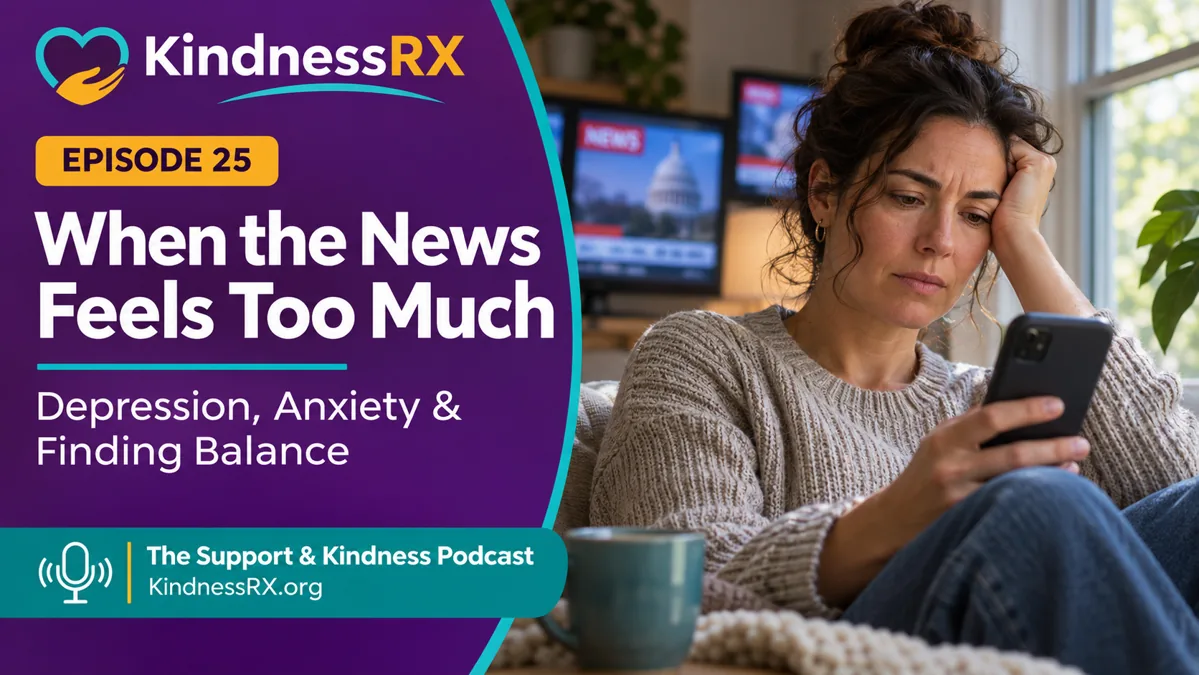
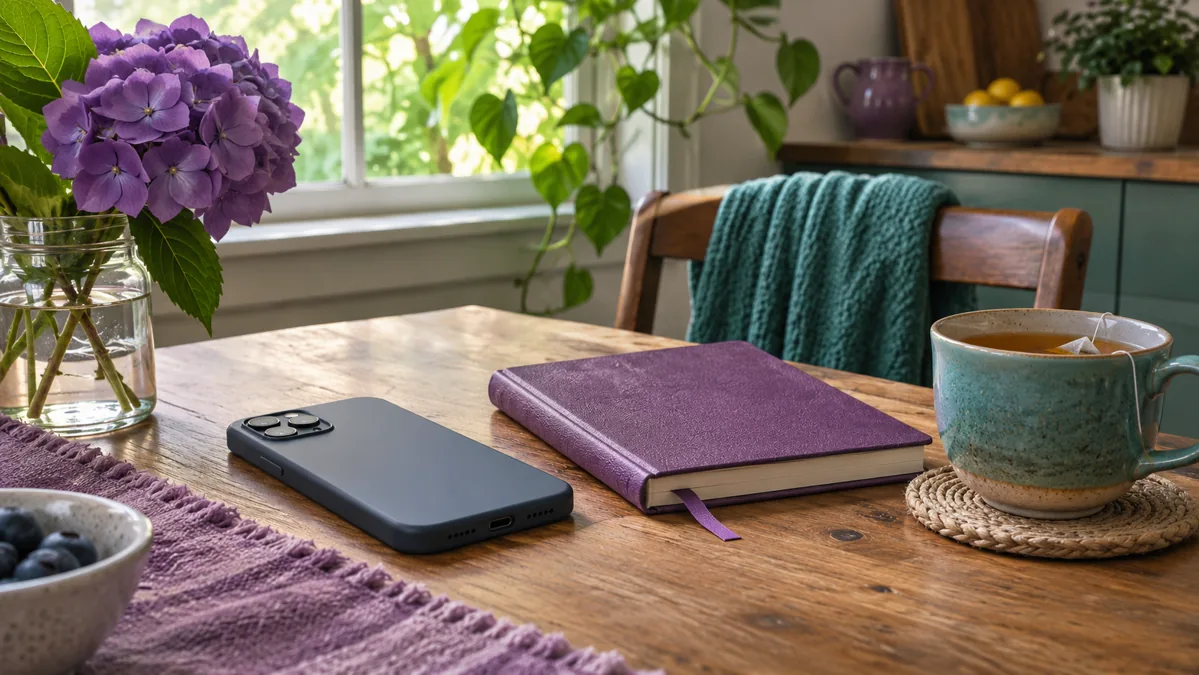
You open your phone to check one headline. Before you know it, you have read the comments, watched three clips, and refreshed the page again.
Nothing around you has changed. Yet your shoulders are tight. Your mind is racing. The day feels harder than it did ten minutes ago.
If that sounds familiar, you have company. You may also find our conversations about Episode 55: phone anxiety and checking messages and Episode 2: what to do when you feel overwhelmed helpful.
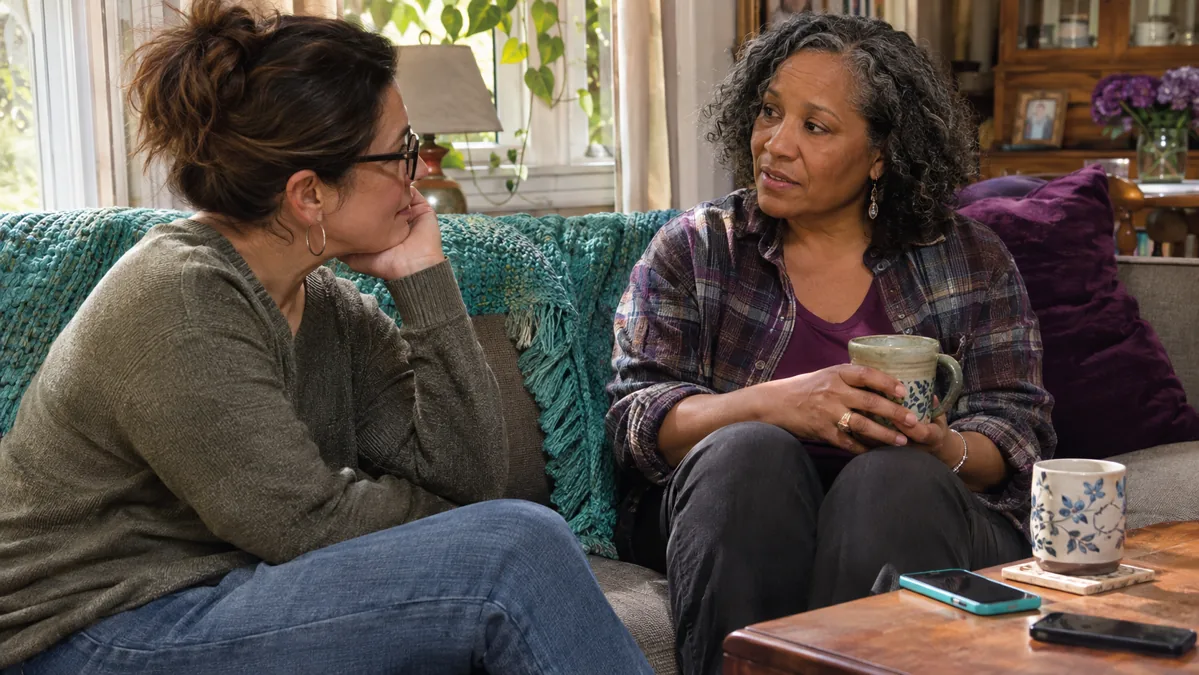
In Episode 25 of The Support & Kindness Podcast, Greg Shaw, Rich, Derek, Liam, and Sarah share how news fits into their lives. Their answers are honest and quite different. Some have found limits that help. Others are still trying to work out where to begin.
This companion builds on that peer conversation with research and practical ideas. You do not need a perfect plan. One small change can be a useful place to start.
Listen to Episode 25
Open the Episode 25 page · Open Episode 25 audio
Content note: The recording includes political discussion and some strong language. You can pause or skip a section whenever you need to.
Find more conversations in the KindnessRX podcast collection. This article offers peer support and education. It does not diagnose a condition or replace care from a qualified professional.
What does news anxiety feel like?
News anxiety is a plain phrase for worry or distress tied to the news. It is not a diagnosis by itself.
You might feel pulled to check for updates even when there is nothing useful you can do. You might feel guilty when you stop. A story may stay in your thoughts long after you close the app.
For some people, this shows up as worry. For others, it feels like anger, sadness, numbness, or a heavy sense that nothing will improve.
Ask yourself what happens after you read or watch:
- Do I feel informed, or mainly more unsettled?
- Am I learning something new, or seeing the same event again?
- Is this taking time from sleep, meals, work, or people I care about?
- Do I keep checking because I hope the next update will make me feel certain?
These questions are a way to notice a pattern. They are not a test you can pass or fail. A difficult day does not mean you have an unhealthy habit. A pattern that keeps getting in the way deserves attention.
What the podcast conversation brings to this topic
Greg describes a period when following news became almost constant. He did amateur reporting for NowPublic, a site he explains is now defunct. Alerts about fires, earthquakes, and disasters arrived from around the world. Keeping up began to take over his life.
He describes burnout, more anxiety, and worsening depression. Then he swung toward avoiding news altogether. His approach now is more deliberate.
“Now I’m more intentional about what I consume, how often, and from which sources.”
Greg, in the opening discussion
“I just felt so helpless and so overwhelmed with these events that were happening.”
Rich, in the discussion beginning at 09:50
Rich makes a useful correction while speaking. His warning sign was not that he stopped caring. He felt helpless. He now follows selected writers and stories instead of taking in every stream of coverage.
Derek describes a rush of adrenaline followed by low mood and a wish to escape. Giving himself time to process things, noticing what he values, and talking with loved ones can help him move through that response.
Liam keeps his distance from social media. He chooses which stories to look into. That is a personal choice that helps him manage his own anxiety and depression.
Sarah brings a different experience. She says she streams news all the time. Political involvement matters to her, and she can see that the habit hurts her well-being. Knowing that has not made it easy to stop.
“But I don’t know the first thing to do about it.”
Sarah, in the discussion beginning at 16:11
That belongs in this conversation too. People can understand a problem and still need help changing it. There is no shame in being at that stage.
What research says about news and mental health
The studies below were added for this companion. They were not named in the recording.
Distressing coverage can be linked with stress
A study of 4,675 U.S. adults after the Boston Marathon bombings examined media exposure and acute stress. People who reported six or more hours a day of bombing-related coverage in the following week had higher acute-stress symptom scores than people with direct exposure, after statistical adjustment.
That finding needs care. It concerned one traumatic event. It did not show that watching television is generally worse than being present at an attack. It also did not establish a safe daily news limit. The study was observational, so it cannot prove that coverage alone caused the distress.
Its practical message is narrower: repeated exposure to traumatic coverage deserves attention, including when someone was not there in person.
Doomscrolling research has limits
Doomscrolling means getting caught in repeated scrolling through troubling material. A September 2026 review found that heavier doomscrolling tended to occur alongside more anxiety, depression, and distress.
The authors rated the outcome evidence as very low certainty. Much of the research looked at people at one point in time. That makes it hard to untangle the direction of the link. Distress could encourage more scrolling. Scrolling could add to distress. Other parts of life could affect both.
The research supports taking the pattern seriously. It does not support blaming a person’s depression on their phone.
One headline number does not describe everyone
An earlier study classified 16.5% of its sample as having severely problematic news consumption. A later replication study found 7.5% in that category in its sample. It also found a link with poorer mental well-being over time.
These were researchers’ categories, not clinical diagnoses of news addiction. The difference between the samples is a good reason to avoid treating either percentage as a fixed rate for all Americans.
How common is stepping away from news?
The Reuters Institute’s 2026 Digital News Report found that 42% across its surveyed markets said they sometimes or often avoided the news.
The report drew on almost 100,000 online interviews in 48 markets. That is a broad picture of news audiences. It is not a measure of depression, and it does not represent every person in the world. Online surveys can miss parts of the population, including people with limited internet access.
The figure does show that stepping back is common enough to be part of a wider discussion. You are not alone if the news sometimes feels like more than you can manage.
Who may find news harder to carry?
A headline can be distant for one reader and deeply personal for another.
A story about health coverage may matter at once to someone who depends on it. A report about a war may involve a reader’s family. Coverage of violence or discrimination may connect with past harm. Money news can land differently when the rent is already overdue.
The Reuters report also found that Instagram reached 42% of surveyed 18-to-24-year-olds as a weekly news source. That describes how news reaches younger people, not their rate of mental illness.
Age, income, race, disability, and other parts of life can shape what a story means to someone. Still, the evidence discussed here does not justify a simple ranking of who is most vulnerable. A group label cannot tell us how any one person will respond.
If you live with chronic pain, fatigue, brain injury, depression, or anxiety, you may also have limited energy to spend on upsetting material. That is a reason to adapt the way you get information. It is not a personal weakness.
Why the next update can feel so hard to resist
Checking often starts with a fair goal. You want to understand what is happening. You want to protect your family. You want to know whether action is needed.
The difficulty comes when useful checking turns into a search for certainty that the news cannot provide.
You refresh. There is no clear answer. You feel unsettled. You refresh again.
Social feeds can add to this. The same event may appear as a headline, a video, a reaction, and an argument. It can feel like four new threats when it is four versions of one story.
Not every platform works the same way. Not every news outlet uses the same methods. Still, it helps to ask whether your chosen format gives you clear information or keeps drawing you back without helping you decide anything.
A gentler plan for staying informed
You do not have to change every habit today. Try one part of this plan and see what happens.
1. Decide what you need to know
 |
 |
 |
Before opening an app, give yourself a purpose.
Perhaps you need a local weather update. Perhaps you want to understand a policy that affects your care. Perhaps you need the date of an election or details about a community event.
Write one question if that helps. When you have a useful answer, you have a natural place to stop.
2. Choose a small news window
Pick a time that fits your day. You might try one short check after breakfast or in the afternoon.
A timer can help, but it is optional. There is no proven number of minutes that works for everyone. Treat the window as an experiment. Notice whether it gives you enough information without taking over the next hour.
During a fast-moving local emergency, you may need more frequent official updates. Your plan can change with the situation.
3. Reduce general alerts, keep safety alerts
Turn off alerts that mainly pull you into commentary or repeated breaking headlines.
Keep information you need for safety. That may include severe-weather warnings, evacuation notices, local emergency messages, or important health updates.
Do not rely on the idea that someone will tell you if a story matters. Choose a reliable way to receive the updates that affect your real needs.
4. Give repeated images a rest
You can read a careful report without watching every clip. Turn off autoplay where you can. Skip graphic images. Close the comments when they add heat without useful detail.
You do not owe anyone repeated exposure to distressing footage to prove that you care.
5. Plan what happens after the news
The CDC’s mental health guidance includes taking breaks from news and social media, connecting with others, and making room for rest and activities you enjoy.
Choose something small and available. Put on music. Look out of a window. Have a drink. Text someone. Notice the chair supporting you.
If slow breathing feels uncomfortable, choose another way to settle. If going outside is difficult, you can pause where you are. A coping step should fit your body and your day.
Make the plan easier when energy or focus is low
Advice often assumes that everyone can set up a new routine and remember it. That is not always true.
If you have ADHD, memory problems, brain injury, or fatigue, make the next step visible and simple.
Move the news app away from your home screen. Save one trusted source as a bookmark. Put a note near your screen that says, “What do I need to know?” Ask a trusted person to help you adjust notification settings.
Choose an accessible format too. Some people prefer plain text. Others find audio easier. Captions, larger type, and a short summary may reduce the work of getting informed.
Keep the plan small enough to use on a rough day. Missing a day is information about the plan. It does not erase your effort.
You can protect your health and take part in civic life
Sarah’s contribution raises a real tension. People want to protect themselves. They also want to make informed choices about their community.
Constant live coverage is not the only route to that information.
You can set aside time to read a local election guide. You can check an official source for registration dates. You can compare candidates’ stated positions on an issue that matters to you. You can ask a trusted person to help find clear information.
Taking breaks does not remove your right to vote or your place in public life.
When a story leaves you feeling helpless, one chosen action may be more useful than another hour of coverage. That could mean contacting a representative, helping a neighbor, or supporting a cause within your means. Rest may be the right action for today too.
What if the news is causing arguments at home?
The episode closes with a shared wish to treat people with care, even across strong differences.
That does not require agreeing about everything. It may mean choosing when and how a conversation happens.
Try a clear sentence: “I care about this, but I do not have the energy to discuss it tonight.” Or ask whether the other person wants a discussion before starting one.
You can set a limit on news talk during meals or calls. You can stop an exchange that becomes insulting. You can return to shared parts of life, such as family stories, a pet, a hobby, or how the week has been.
Connection should not require you to accept abuse. It can include firm limits as well as warmth.
A companion challenge: choose one gentle change
These two options were added for this article. They are not presented as a challenge recorded in the episode.
Option one: Change one news setting. Turn off one general alert, disable autoplay, or move one app. Keep essential safety messages. Try the change for a few days and notice what helps.
Option two: Add one act of connection. After a news check, send a kind text, sit with someone, or join a supportive conversation. Choose something within your energy and comfort level.
You do not need to report back or get it right. The aim is to learn what makes a hard day a little more manageable.
Common questions about news anxiety
Can watching the news cause depression?
Some studies link distressing or problematic news use with poorer mental health. That does not prove that news alone causes depression. Depression has many influences. If low mood persists or affects daily life, discuss it with a qualified professional.
Should I stop following the news completely?
A short break may be worth trying. Some people prefer selected updates instead. Keep access to essential safety information and facts you need for decisions. You can review your plan as your needs change.
How much news is too much?
There is no single limit for everyone. Pay attention to the effect on your sleep, attention, mood, and daily tasks. Repeated checking that feels hard to control is a good reason to ask for support.
Is doomscrolling a sign that I do not care about my health?
No. It can begin with fear, concern, habit, or a wish to understand. Being harsh with yourself rarely makes change easier. Start with one small step, and get help if the pattern feels stuck.
Support is part of the plan
If news stress keeps affecting your sleep, mood, or ability to get through the day, bring it up with your doctor or therapist. You can describe the pattern without needing a label for it.
You can also explore the KindnessRX resources page or find connection through the free KindnessRX peer support groups. Visit the page for current details and sign-up information. Peer support offers shared understanding. It does not replace professional treatment.
In the United States, you can call or text 988 or visit the 988 Suicide & Crisis Lifeline for support during emotional distress or a crisis. If there is immediate danger, call emergency services.
You can care about the world and leave room to care for yourself. The next step can be small. You do not have to take it alone.
TED talks to explore
These talks offer more ways to think about news and public debate. They are added viewing suggestions, not clinical evidence or resources mentioned in the recording.
- Ian Bremmer and Helen Walters: How to be smarter about the news, recorded in May 2026. A wider discussion about how we approach the information we receive.
- Randall Schröder: Algorithms of outrage: Why we can’t talk to each other, a 2022 TEDx talk. A prompt for thinking about online conflict and conversation.
Further reading and research notes
These resources expand the conversation. They were added for this companion, rather than named in the recording.
- Holman and colleagues: Media exposure after the Boston Marathon bombings, published in 2014. Observational study of 4,675 adults. Findings concern a specific traumatic event and do not establish cause or a universal news limit.
- Doomscrolling systematic review and meta-analysis, September 18, 2026. Links with anxiety, depression, and distress; outcome evidence rated very low certainty.
- Problematic News Consumption: A Replication Study, online publication December 2024, journal issue 2025. Study categories are not clinical diagnoses. Sample estimates should not be treated as fixed population rates.
- Reuters Institute Digital News Report 2026, June 2026. Audience survey across 48 markets. News avoidance is not a measure of mental illness.
- CDC: Managing stress. Practical guidance on coping, connection, and getting help.