Phone Anxiety: Why Checking Your Phone Can Feel Like Too Much
By Greg Shaw | Companion to Episode 55 of The Support & Kindness Podcast
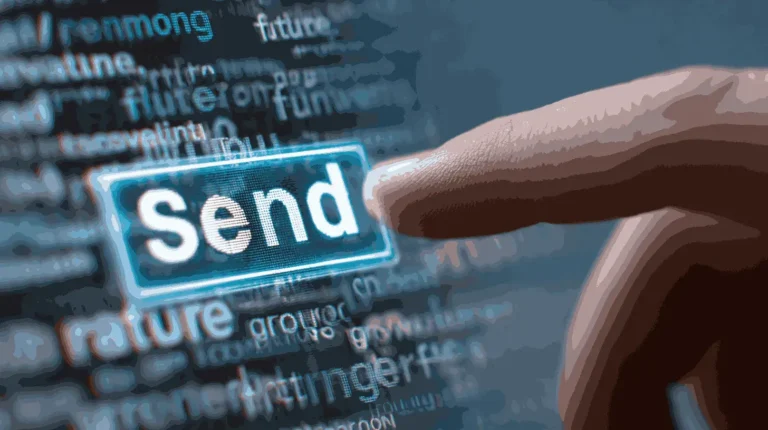
Your phone lights up. You have not even opened the message, but you already feel the pressure.
Who is it? What do they need? Is something wrong? Will this turn into another job you do not have the energy to do?
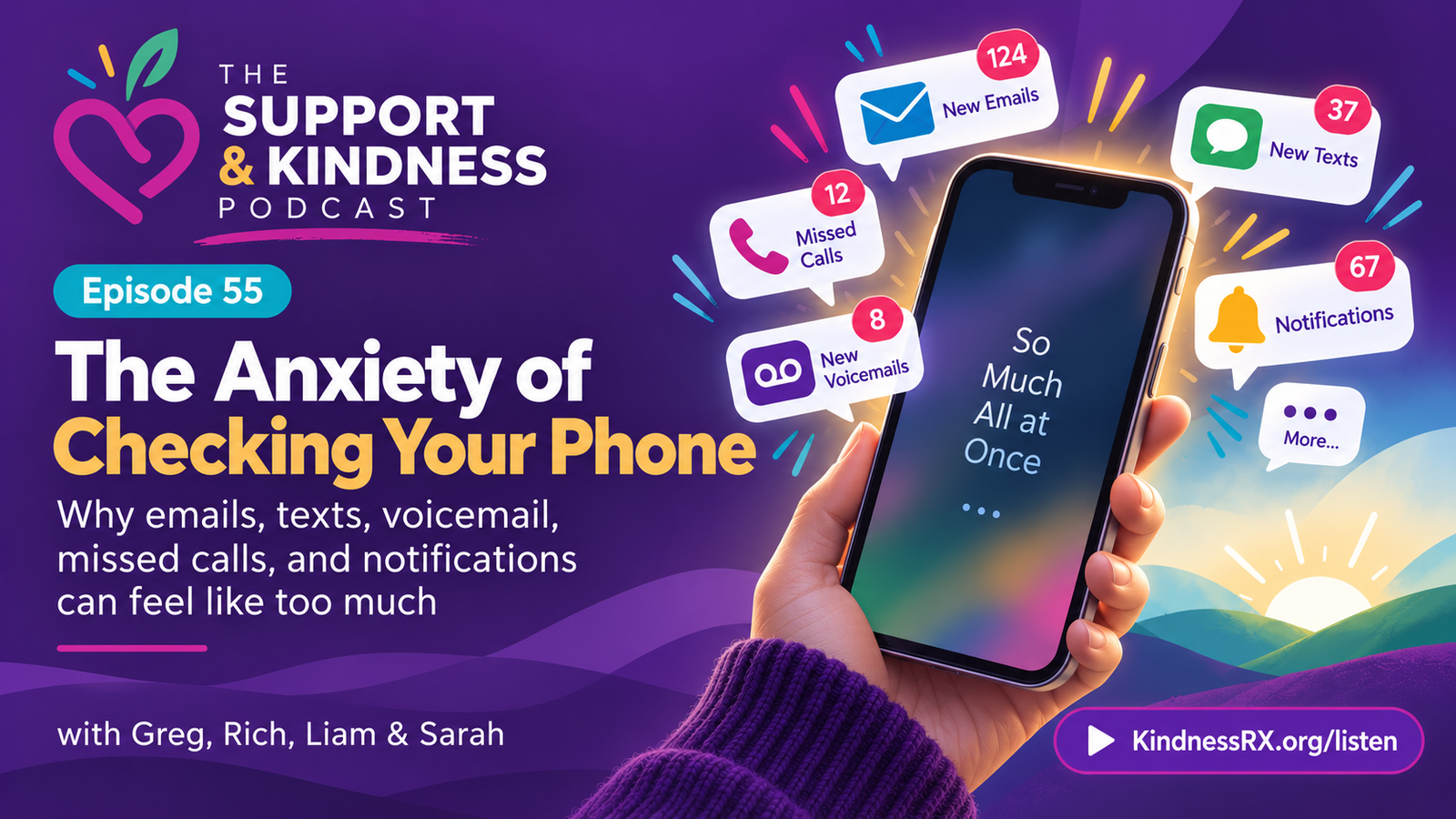
That is what I mean by phone anxiety in this conversation. The anxiety of checking your phone can start before you know what a message says. It can show up around texts, missed calls, voicemail, email, or that little red number that keeps growing.
In Episode 55, Rich, Liam, Sarah, and I talk about that feeling, the guilt that can follow, and a few ways to make communication easier. Listen to Episode 55.
We are using “phone anxiety” to describe an experience. It is not a diagnosis. Being slow to reply can also mean you are busy, tired, in pain, or taking a break. We cannot tell what is happening in someone's life from a read receipt.
When one message feels like a whole list of jobs
In our conversation, Sarah explains that she loves her friends and family. She wants to stay in touch. The pressure comes from feeling that she must stop what she is doing, check the message, work out what is needed, and answer straight away.
That is a lot of steps hiding behind one little ding.
Liam talks about seeing several messages and wondering whether he has the time or resources to do what people need. Rich describes how a call feels different when he is waiting for an important answer about his family or medical care. The same phone can feel ordinary one day and frightening the next.
For me, the ringing and interruptions had become too much. I said on the show that I keep my phone on Do Not Disturb much of the time. I still check messages. It is the sudden demand for my attention that I wanted to reduce.
Those are our experiences. Yours may be different. You might fear bad news, an argument, another bill, or having to explain why you have been quiet. The useful question is: what part of this message feels hard?
Reading it, deciding what to do, and writing a reply are separate tasks. You may be able to take one step before you are ready for the others.
Phone anxiety and attention: what the research can tell us
It is possible for an alert to interrupt you even when you leave the phone alone. A 2015 study by Cary Stothart and colleagues found that receiving phone notifications disrupted an attention-demanding task without people actively using their phones. The paper appeared in the Journal of Experimental Psychology: Human Perception and Performance.
That is a finding about attention. It does not prove that every notification causes anxiety.
On the episode, I promised to link the TechRadar article about phone notifications and attention. Here it is. We have also located the original 2026 study by Hippolyte Fournier and colleagues.
That study involved 180 university students. Smartphone-style notifications temporarily slowed performance on a task involving colors and words. The slowing lasted about seven seconds. Alerts that seemed more personally relevant caused greater disruption.
Seven seconds is a result from that particular task. It is not a rule that every message takes exactly seven seconds from every person. It also does not tell us how long the fear of opening a message can last.
I think the useful takeaway is much smaller than the headline: we do not have to answer an alert for it to pull on our attention. That gives us a good reason to be thoughtful about which apps get to interrupt us.
Why putting it off can make it feel bigger
You see a message. You feel dread. You put the phone down and feel better for a while.
Then the message is still there. Perhaps another one has arrived. Now you are worried about the original message and about explaining the delay.
The Centre for Clinical Interventions describes this pattern in its guidance on the anxiety cycle: avoidance can bring short-term relief while keeping fear going. Its guidance is about anxiety treatment. We are borrowing the pattern to help explain an everyday experience, rather than presenting our message exercise as a clinical treatment.
Trauma can add another layer for some people. The VA National Center for PTSD explains that avoidance can become a problem when it is the main way someone copes with trauma reminders. An unread inbox by itself does not mean someone has PTSD.
There is a distinction worth keeping here. Choosing a rest period, leaving a hostile conversation, or protecting limited energy can be reasonable. A communication boundary can help you stay connected on terms you can manage. The concern is when fear repeatedly keeps you from things you need or want to do.

A boundary gives people something clear to work with
“I check messages in the morning and evening” tells people what to expect.
You might prefer: “Text is easier for me than a call.” Or: “If something is urgent, please say what it is in the message.”
Liam made a useful point on the show. When someone tells him how they check messages, he knows how to communicate with them. A boundary can help both people.
Choose something realistic. If your job involves urgent calls, a twice-daily schedule may not fit. If you rely on a caregiver, medical team, or family contact, plan how they can reach you. Someone may need to call from an unfamiliar number, too.
You can also renegotiate a boundary. A promise made on a good day might need to change when pain, illness, or a family problem takes up your energy. A short update gives the other person more information than silence does.

Less checking can mean less stress
A two-week study by Kostadin Kushlev and Elizabeth Dunn involved 124 adults. During one week, people were asked to check email no more than three times a day. During the other week, they could check as often as they wished. They reported less daily stress during the limited-checking week.
That was an instruction used in a study, not a perfect schedule for every person. Participants did not always stick to it. The findings suggest that constant checking is worth questioning where you have some choice over your day.
A separate 2019 field experiment with 237 participants tested different notification schedules. People who received alerts in three daily batches reported less stress and more control over their phones than those receiving them as usual. Turning every notification off brought few of those benefits and increased anxiety and fear of missing out.
You can try a selective change. Silence a shopping app. Turn off a noisy group chat's sound. Keep the calls or alerts that matter to your safety. See whether the change makes your day easier, then adjust it.
Phone settings that may give you some breathing room
Start with one setting rather than changing everything at once.
- Silence a non-essential app. You can still open it when you choose.
- Hide lock-screen previews. A message can wait without displaying its contents every time you pick up your phone.
- Use a Focus or Do Not Disturb period. Check which people, calls, and apps can get through.
- Try a notification summary where available. Some alerts can arrive together instead of throughout the day.
- Choose a checking window. Leave a reminder if losing track of time makes this hard.
The official Android notification guide explains app controls and other options. Apple has guides for allowing or silencing notifications in Focus and changing notification settings.
Menus differ by phone and software version. Test essential contact settings with someone you trust. Keep alarms, emergency alerts, caregiver contact, and time-sensitive messages in mind before relying on a new setup.
Words you can borrow when a reply feels difficult
You do not have to write an essay about why you are overwhelmed. A useful reply gives the other person enough information to understand the next step.
When you have seen the message: “I saw your message. I need more time to answer.”
When a call feels too much: “I can't talk on the phone today. Text is easier for me.”
When you need a clear request: “I have limited energy today. Can you tell me the one thing you need from me?”
When you have missed a call: “I saw you called. Is this urgent, or can we talk later?”
When you need to decline: “I'm not able to take this on right now. I wanted to answer clearly instead of leaving you waiting.”
When you want to reconnect: “I'm sorry I've been quiet. I've been overwhelmed, and I'd like to reconnect.”
These are examples, not promises you have to copy word for word. If you cannot commit to tomorrow, do not promise tomorrow. Use words that fit your situation.
Try the one-message reset
If opening the whole inbox feels impossible, choose one safe, manageable message. Check for anything time-sensitive first.
- Reduce non-essential interruptions for a few minutes.
- Open that one message without trying to clear everything.
- Decide whether it needs a reply, a reminder, a calendar entry, or no action.
- Send a short reply if you can, or write down the next step.
- Stop when you need to stop.
You could ask someone to sit beside you. Sarah described doing that while her daughter learned to make phone calls. Support can mean staying with someone while they take the step themselves.
This is a peer suggestion to try, not a test you have to pass. One message is still one message. You do not have to clear the whole inbox before your effort counts.
If you are waiting for someone to reply
It can hurt when you do not hear back. It can make you worry. Those feelings deserve care, too.
But an angry follow-up can make the other person more afraid to look. If your message can wait, say so: “No rush. I wanted you to know I'm thinking about you.”
If you need an answer by a certain time, explain that clearly: “I need to book this by Thursday. Could you let me know by Wednesday evening?” A specific request is easier to understand than several messages saying “Hello?”
When someone is overwhelmed, you can offer a choice: “Would it help if I listened, helped you sort things, or gave you some space?” Then respect the answer.
If you have a real reason to believe someone is in immediate danger, use an appropriate safety response. A caring message is not a substitute for urgent help.
Kindo's weekly challenge: One Message, One Boundary
Choose the path that fits your week.
If messages feel overwhelming: choose one safe, manageable message. Read it if you can. Send one honest sentence, or note what you need to do next. Then set one small boundary, such as silencing a non-essential app or choosing a checking time.
If you are supporting someone: send a message that lowers the pressure. “No need to answer right away. I care about you.” Offer practical help if appropriate, then give them room.
Keep your essential contact plan in place. The challenge is a small step toward clearer communication, not disappearing from things that need your attention.
When more support would help
If fear around messages keeps you from medical care, important bills, work, or relationships, consider talking with a health professional. You can explain the specific difficulty: opening messages, making calls, replying, or coping with the fear that comes before any of them.
KindnessRX also offers free online peer support groups. Peer support can give us space to share experiences and feel less alone. It does not replace medical care.
In the United States, you can call or text 988 for crisis support. For immediate danger, call emergency services.
I hope this conversation makes it easier to take one small step, and to give other people a little more patience. You do not have to be available every minute to be a caring person.
Listen to The Anxiety of Checking Your Phone, Episode 55, and share it with someone who might recognise the feeling.