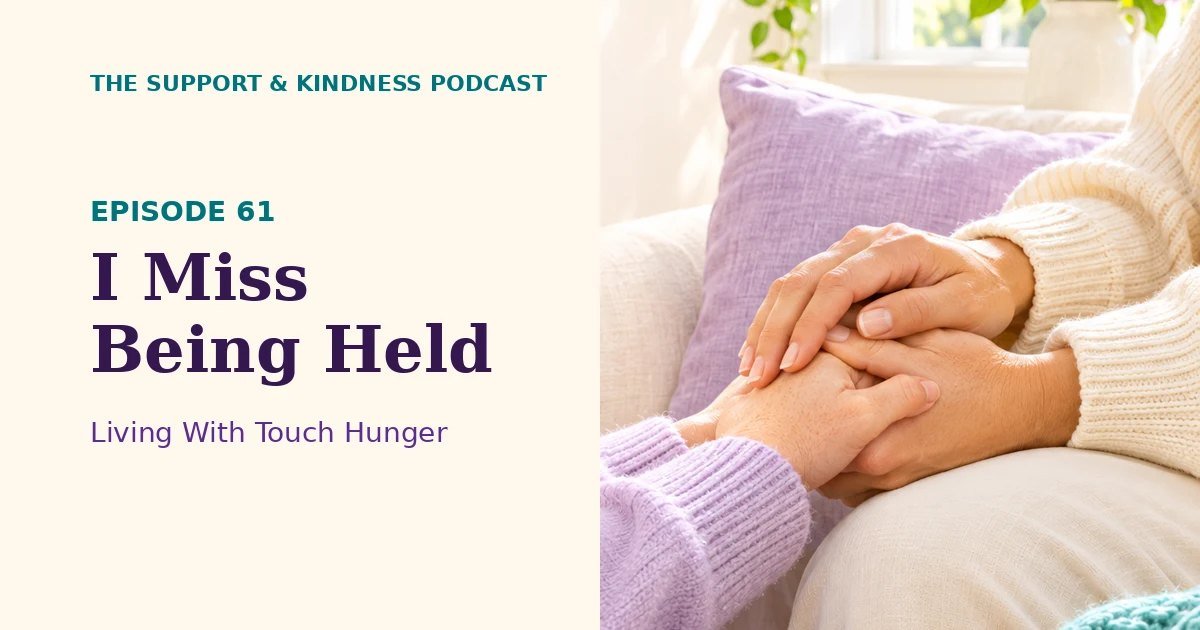
Episode 61: I Miss Being Held — Living With Touch Hunger
You can have a phone full of messages and still wish someone were beside you. Maybe you miss a hug at the door. Maybe you miss a hand on your shoulder after a long day. Maybe you just want to sit next to someone who knows you well enough to let the room go quiet.
In Episode 61 of The Support and Kindness Podcast, Greg Shaw, Rich, Liam, and Sarah talk about touch hunger, the longing for more welcome physical affection than you have right now. They talk about loneliness in a shared home, missing someone who is gone, and what to say when you want a hug but worry how the question will land.
Listen to Episode 61 on Spotify.
What does touch hunger feel like?
You may also hear it called skin hunger, touch deprivation, or touch starvation. Researchers use the term affection deprivation for the gap between the affection someone wants and what they receive. Touch hunger is an everyday way to describe a feeling. There is no checklist or daily hug target to meet. Kory Floyd’s research on affection deprivation.
You might notice it at a specific time of day. One person might miss falling asleep beside their partner. Someone else might miss the hello hug they used to get when a friend came by. You might live alone and feel well connected most days. You might live with someone and wonder when you last held hands for no reason at all.
A little more detail can make it easier to figure out what you want. Try finishing the sentence “I miss…” with something that actually happened. “I miss holding hands on the sofa” gives you somewhere to start. So does “I miss having someone nearby while I make dinner.”
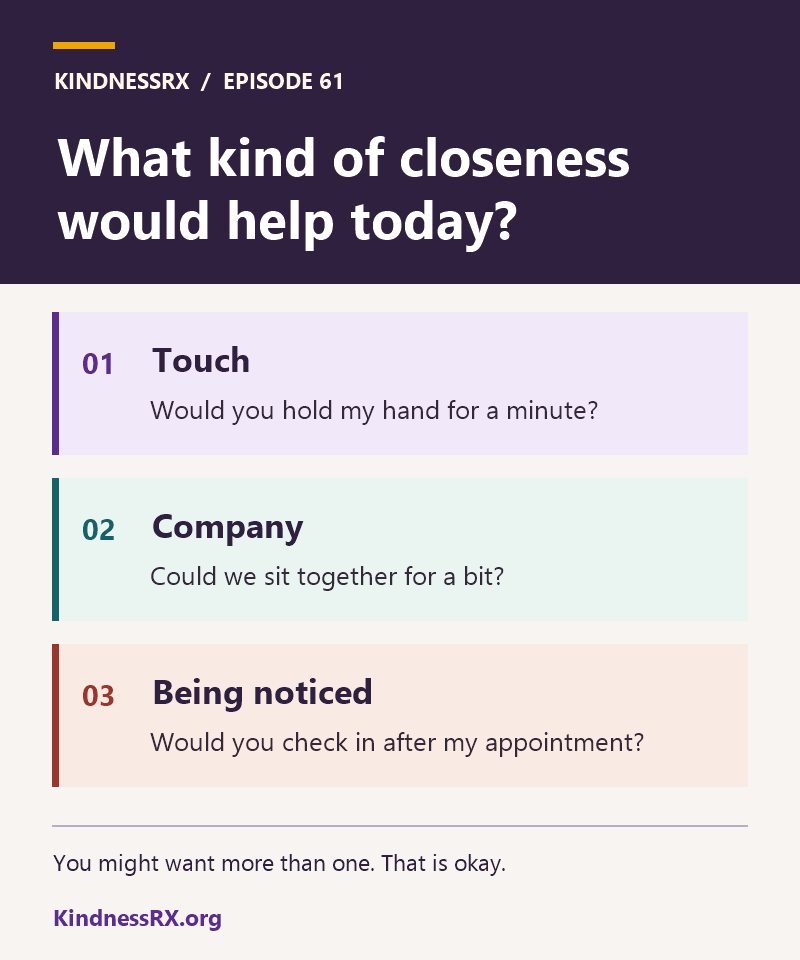
Do you miss touch, company, or being noticed?
Think about when the feeling came up last. Was it after a difficult appointment? When you saw another couple hold hands? When you got into bed and realised you’d gone the whole day without speaking to someone in person? The moment can give you a clue about what you need.
Liam talks about small gestures, such as a hand on an arm in passing. What stayed with him was the message behind them. He puts it this way in the episode. “Hey, I’m glad you’re here. I notice you. I’m happy to be in your company.”
If you miss being noticed, you might ask someone to check in after your appointment. If you miss being held, you might want to say those exact words to a person you trust. Sometimes both are true. You can appreciate a friend’s call and still wish they were on the sofa beside you.
Try asking yourself two questions. What kind of closeness would help today? Who, if anyone, would I feel comfortable asking? You can leave the second question blank. Sometimes recognising what you miss is the only step available that day.
What research says about touch and comfort
A 2024 review in Nature Human Behaviour included 12,966 people across the studies it examined. Researchers combined results from 137 studies and reviewed 75 more. On average, structured touch interventions, including massage, helped with some measures of pain, anxiety, and depression in adults. The studies tested different kinds of touch, and people usually knew which treatment they received. That matters when interpreting the results. The review gives us a broad view of structured touch. Everyday affection depends on the people involved, what they want, and how it feels in the moment. Packheiser and colleagues, 2024.
A study published in October 2026 asked a more personal question. Which hugs do people remember? Researchers looked at responses from 15,049 UK adults aged 18 to 92. About seven in ten recalled a hug because of its positive emotional effect. People often mentioned feeling understood, comforted, or supported. The survey drew volunteers online, about three quarters of the sample were women, and the analysis excluded people reporting a current disability, long-term condition, or impairment. The number describes that sample. Dueren and colleagues, 2026. Coverage from Phys.org.
During COVID-19 restrictions, an online survey found that people who went without more of the touch they usually received from close contacts reported more loneliness and anxiety. The survey can show a link. It cannot tell us which came first or what would help one person today. Von Mohr and colleagues, 2021.
The recording also mentions a 2021 lab study where people faced a stressful task. Those who received a hug or tried gentle self-touch had a smaller cortisol response than the control group. Cortisol is a hormone the body releases in response to stress. Participants’ own ratings of how stressed they felt did not improve in the same way. Both results are worth knowing about, especially if you try a comfort exercise and feel much the same afterward. Dreisoerner and colleagues, 2021.
The studies here ask different questions. The hug survey asked what people remembered. The lab study measured a response to a short stressful task. The larger review brought together many different touch practices. Taken together, they give us more ways to talk about touch. Your preferences, your circumstances, and the person in front of you still matter when you decide what feels right.
How to ask for affection and leave room for a no
Ask about one thing. “Would a hug feel okay right now?” is easier to answer than “Why don’t you ever touch me?” If you want to ask for a particular kind of touch, say so. “Could we sit close while we watch this?” or “Would you hold my hand for a minute?” gives the other person a clear choice.
If touch sometimes leads to an assumption about sex, it can help to say what you want plainly. “I’d love to cuddle for a bit. I only want to cuddle.” Give the other person time to answer. If they say no, “Thanks for telling me” is enough. You can offer to keep talking or just leave a little space. A yes today is a yes for this moment. Either of you can change your mind.
You get to name the kind of closeness that feels right for you, too. Try “A side hug works better for me,” “Please ask first,” or “I’d love your company. I need some room today.” If you hurt, feel overwhelmed, or tense up with surprise contact, there’s no need to talk yourself into a hug.

When two people want different amounts of touch
If you’re bringing this up with someone you live with, try talking about it at a quiet time. You could say, “I’ve been missing how we used to sit together after dinner. Would you be up for trying that again sometime?” They may miss it too. They may be tired by then, or the position that feels cosy to you may hurt their back. A small, specific request gives both people something they can talk about.
Here are a few ways to make the conversation easier.
- When you need warning first. “I’d enjoy a hug sometimes. Could you ask first so I have time to answer?”
- When you want to stay close but the touch is too much. “Could we sit side by side without leaning on each other?”
- When you’re worried a hug will carry an expectation. “I’d love a hug. I want to keep it to that.”
- When the answer is no and you feel disappointed. “Okay. Thanks for telling me.” Give yourself a moment to feel disappointed without asking the other person to change their answer.
In the episode, Sarah remembers how much easier it was to talk about what felt comfortable with someone who asked, listened, and took his time. Greg makes room for people who want somebody nearby and want to say no to touch that day. You can ask for a different kind of closeness each time. It can be as simple as moving your chair a little nearer and checking whether that feels good to both of you.
When care, pain, or grief changes what touch means
Help getting dressed, moving safely, or getting a blood pressure reading can be welcome and important. It can also feel different from a friend reaching for your hand. If much of the touch you receive is part of your care, you might miss the kind of affection that starts with someone simply wanting to be with you. With a trusted friend, it can help to ask for a visit where you can spend time together at your own pace.
Grief can make the need very specific. You might miss the exact way someone held your hand or the weight of their arm around your shoulders. A warm moment with a friend can exist alongside that grief. If you feel up to talking, tell a trusted person one ordinary thing you miss about the person who is gone. If you want to keep it private, write it down in your own words.
Rich shares what a friend did after his brother died. The friend came over with a video game, and they played it together. Some visits involved talking. Other times they just played. Years later, the game is still something they both remember. If you’d like company during a difficult time, you might ask someone to do an ordinary thing with you. A shared programme, a puzzle, or a short visit while you fold laundry can give you something to do with your hands while you decide how much you want to say.
If someone you care about is grieving, give them one offer with an easy way to decline. “I’m free Tuesday afternoon. Would you like me to come by for a bit?” You might also ask, “Would you like a hug, or would you rather I sit with you?” Follow their lead. Grief can change what feels welcome from one visit to the next.
If you receive hands-on care, you can also ask for a little more control over how it happens. You might say, “Please tell me before you move my arm,” or “My shoulder is sore today. Can we pause?” Even when time is short, clear words about what you need can help the person assisting you understand what is comfortable.
What can help when nobody is nearby?
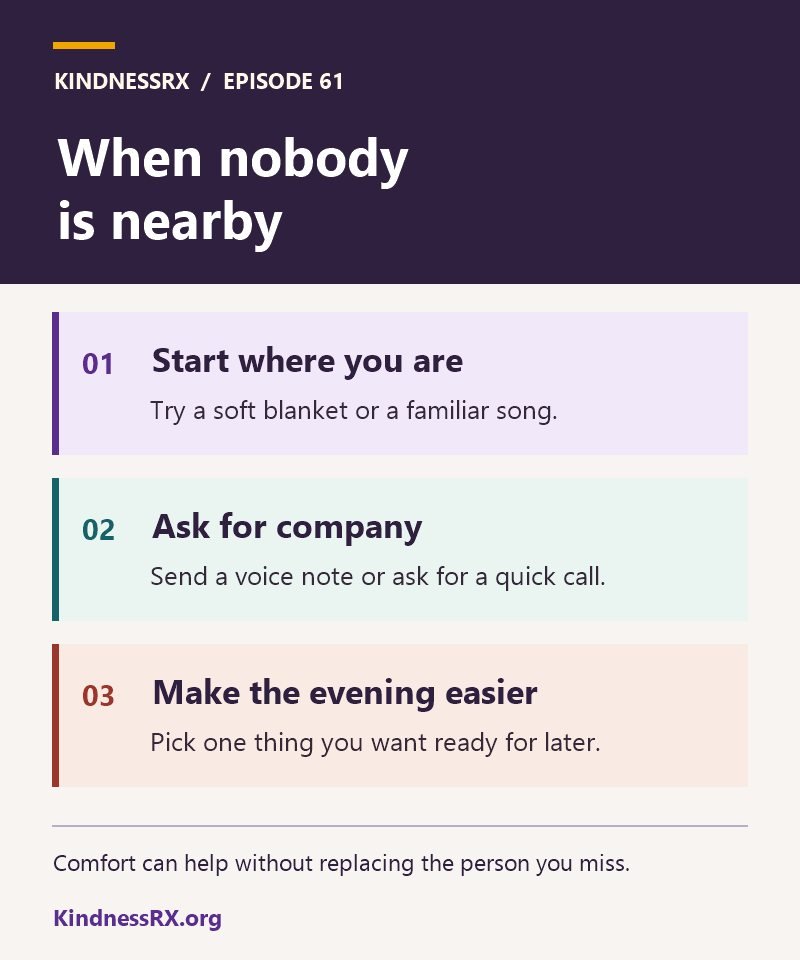
Start with what feels possible today. You could put a soft blanket on your lap, rest against a pillow, or play a song you know by heart. If a visit takes more energy than you have, try asking someone for a quick call or an ordinary voice message. Tell them they can talk about anything, even what they had for lunch. For some people, hearing a familiar voice helps an evening feel a little less long.
One small 2026 trial assigned 78 adults who reported chronic stress, most of them young women, to try gentle self-touch or brief meditation over two weeks. Participants in both groups reported feeling less stressed, tired, or lonely just after the exercises. The researchers found no clear longer-term improvement or meaningful difference between groups. If you want to try resting a hand on your arm for a minute, treat it as a chance to notice how you feel. You can stop whenever you like. Maier and colleagues, 2026.
If pain, transport, money, or energy makes going out hard, a recurring five-minute call can be easier than making a new plan each week. A peer group can be another way to hear a friendly voice and get to know people over time. At KindnessRX, you can join our free groups with your camera off. Explore KindnessRX peer support groups.

Make a small plan for the hardest part of the day
Pick one time when the feeling tends to show up. Make the plan small enough that you could do it on a day when you’re tired.
- After an appointment. Ask someone you trust if they have five minutes to talk after you get home. You can tell them ahead of time whether you want to talk about the visit or hear about their day.
- At bedtime. Put a familiar song or radio programme within easy reach. If silence usually feels good, leave that option open too. You can decide when you get there.
- On weekends. If you’re up for company, suggest one short visit or a regular programme you can watch at the same time and text about. Ask for the version that works with your energy and mobility.
- When you have someone you trust nearby. Decide what kind of touch you’d actually like. A side hug, a hand to hold, or sitting close may each feel different. Ask for the one that feels right and let the other person choose.
Some days, the feeling may still be there after you try something. You can choose the same small comfort again, make a different plan, or leave it alone for the evening. If the feeling keeps weighing on you or starts affecting daily life, you can bring it up with a counsellor or health professional. “I miss affection, and it’s been hard lately” is enough to start that conversation.
This week’s challenge
Choose one option that fits your day.
- Name what you miss. Write one sentence starting with “I miss…” Keep it private if you like.
- Ask for one small moment of connection. Ask a trusted person for a hug, a call, or a short visit. Leave room for their answer.
- Choose a few minutes of comfort. Try an ordinary blanket, a pillow, a favourite song, or a quiet spot. If it feels uncomfortable, stop.
You can do the first or third option without sending a message or leaving home. If you try the second and the person is busy or says no, give yourself credit for asking clearly. You gave both of you a choice. That counts.
If you’d like to try a group in your own time, you can look at the upcoming sessions before deciding whether to join. See the KindnessRX support group schedule.
TED talks, books, and further reading
- Physician Abraham Verghese discusses what a personal, hands-on exam can mean for patients. TED, A Doctor’s Touch.
- Psychiatrist Robert Waldinger shares what a long-running study can tell us about the relationships that sustain us. TED, The Secret to a Happy Life.
- Communication researcher Kory Floyd looks at affection and everyday relationships. The Loneliness Cure.
- Psychologist Tiffany Field reviews touch research across settings and stages of life. Touch, second edition, MIT Press.
- Researchers Christopher Noone and Rachel McKenna-Plumley review how touch and loneliness may relate. Lonely for Touch?.
- Find more peer-support and crisis resources. KindnessRX Resources.
This is a peer discussion. For crisis support in the United States, call or text 988. If you’re in immediate danger, call 911. Outside the U.S., find your local emergency service or use an international helpline directory. 988 Lifeline · Find A Helpline