Episode 44: Can a Chatbot Support Your Mental Health
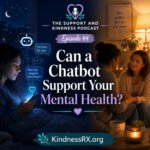

Episode 44
Content note: This episode discusses suicidal thinking and the ways some AI tools have responded poorly to people in crisis, including young people. If you're struggling, you're not alone. In the US, call or text 988 for the Suicide & Crisis Lifeline. International listeners: please contact your local crisis line.It's 2 a.m. Your chest is tight, your mind is racing, everyone you love is asleep — and the phone on your nightstand will answer you right now. It won't sigh. It won't judge. More and more people are reaching for that glowing screen. So we asked an honest question: can a chatbot really help your mental health?Greg, Rich and Liam talk it through with no script and no sales pitch — the real promise, the real limits, and the risks nobody's regulating yet. We go back to 1966 and the MIT scientist who built the first therapy chatbot and then spent the rest of his life warning people about it. We look at what the research actually found, both the hopeful and the alarming. And we land somewhere practical: a journal that talks back is not a therapist, and it should never be your crisis plan.WHAT WE COVERELIZA (1966), the "ELIZA effect," and why this debate is almost 60 years old
Dartmouth's Therabot trial: depression symptoms down ~51%, anxiety ~31%, eating disorder concerns ~19%
Stanford's 2025 findings — chatbots that stigmatized schizophrenia and alcohol dependence, and one that answered a crisis question with a list of tall bridges
Nearly 1 in 5 young people ages 12–21 have used an AI chatbot for mental health advice — and most haven't told a single person
Why a bot built to be agreeable is the opposite of what real support sometimes requires
The privacy question: who owns your most private thoughts?
The APA's November 2025 advisory — a tool, not a replacement
Warm lines: a free, human alternative when you're not in crisis but you are lonelyCHAPTERS(00:00) The 2 a.m. phone(01:13) What an AI therapy chatbot actually is(02:03) The numbers, and why cost drives this(03:01) ELIZA, 1966 — and the man who warned us(05:47) Rich and Liam on trust, machines and the ELIZA effect(11:19) The promising side: Dartmouth's Therabot trial(14:20) WebMD, Google, and shame-free searching(18:09) Stanford's findings and the bridge question(23:56) When "always agreeable" turns dangerous(28:14) What the APA actually says(32:12) What careful use looks like(36:13) What's on your heart this week(41:15) Your challenge and closingTHIS EPISODE: Hosted by Greg Shaw with co-hosts Rich and Liam.YOUR CHALLENGE THIS WEEK: Take one thing you'd normally type into a screen — a worry, a win, a "today was hard" — and say it to an actual human instead. A machine can hold your words. A person can hold you.💜 Free weekly peer support groups:
Brain Injury (Mon 1PM ET)
Chronic Pain (Tue 12PM ET)
Mental Health (Wed 7:30PM ET).
Sign up / RSVP: https://kindnessrx.org/groups☕ Our groups are free and always will be. Help keep them that way: https://buymeacoffee.com/kindnessrxCONNECT WITH KINDNESSRXWebsite: https://kindnessrx.orgListen to every episode: https://kindnessrx.org/listenNewsletter: https://kindnessrx.beehiiv.com/YouTube & social: @KindnessRXCrisis support: 988 Suicide & Crisis Lifeline — call or text 988 (US). https://988lifeline.org