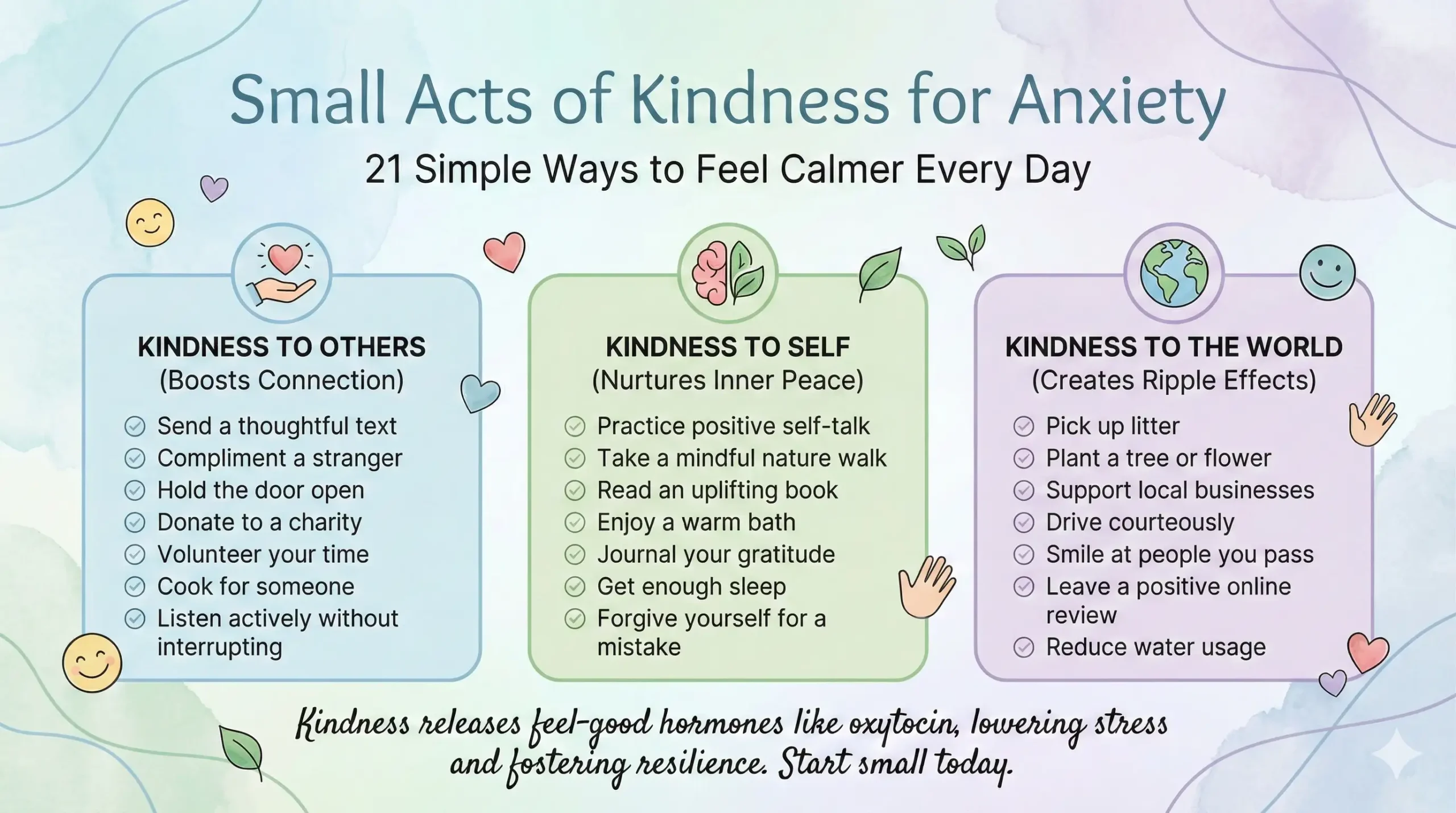
21 Small Acts of Kindness for Anxiety
21 Simple Ways to Feel Calmer Every Day
If anxiety has been weighing on you, you are not alone—and you are not doing anything wrong by feeling this way. On hard days, small acts of kindness for anxiety, like taking a slow breath, speaking to yourself gently, or offering a simple kind gesture to someone else, can feel more possible than big changes or complicated coping skills. That is why this article focuses on very small, very human acts of kindness.
Research suggests that kind actions can gently shift attention away from constant worry, support a sense of connection, and ease physical stress responses. Kindness is not a cure for anxiety, and it does not replace professional care—but it can be one soft tool you keep close for moments when everything feels overwhelming.
pmc.ncbi.nlm.nih.gov
As you read, remember this: you deserve the same patience and care you offer others. Any act of kindness you try—especially toward yourself—already counts.
mqmentalhealth.org
How kindness helps anxiety (in plain language)
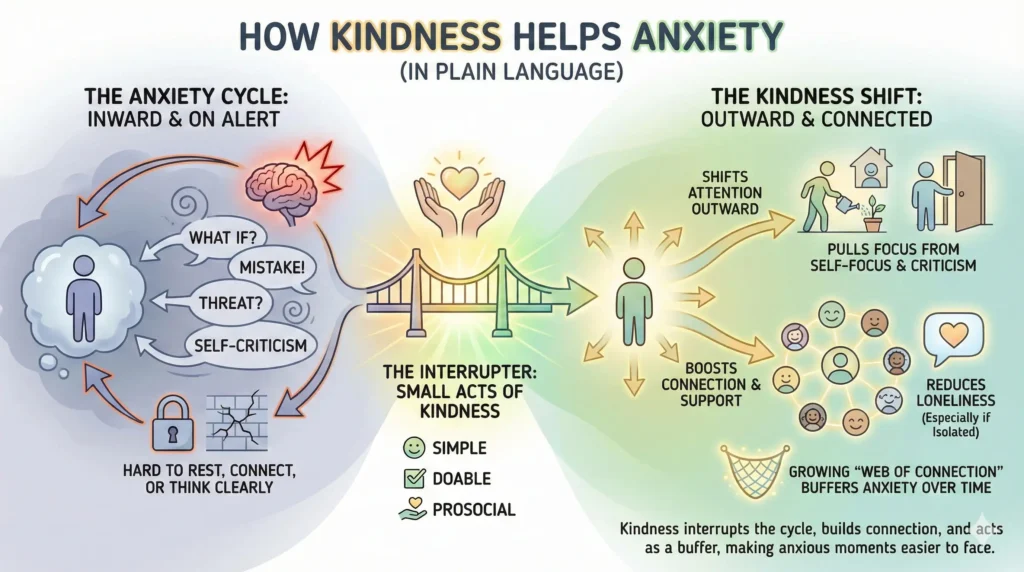
Anxiety often narrows your world. It pulls attention inward toward possible mistakes, threats, and endless “what ifs.” When your nervous system stays on high alert, it becomes harder to feel safe enough to rest, connect, or think clearly.
abundancetherapycenter.com
Small acts of kindness can interrupt this loop for some people. Studies following individuals with anxiety and depression symptoms show that those who practiced simple kind behaviors often reported larger reductions in distress and higher life satisfaction compared with people using other techniques.
One explanation is that prosocial behavior—doing something for someone else—shifts attention away from self-criticism and constant monitoring, which are common in anxiety.
psychiatry.org
Kindness can also support connection. When anxiety pushes people toward isolation, even small moments of reaching out may reduce loneliness and increase perceived social support. Over time, these small connections can make anxious moments feel less lonely.
pmc.ncbi.nlm.nih.gov
Mental health benefits linked to kindness
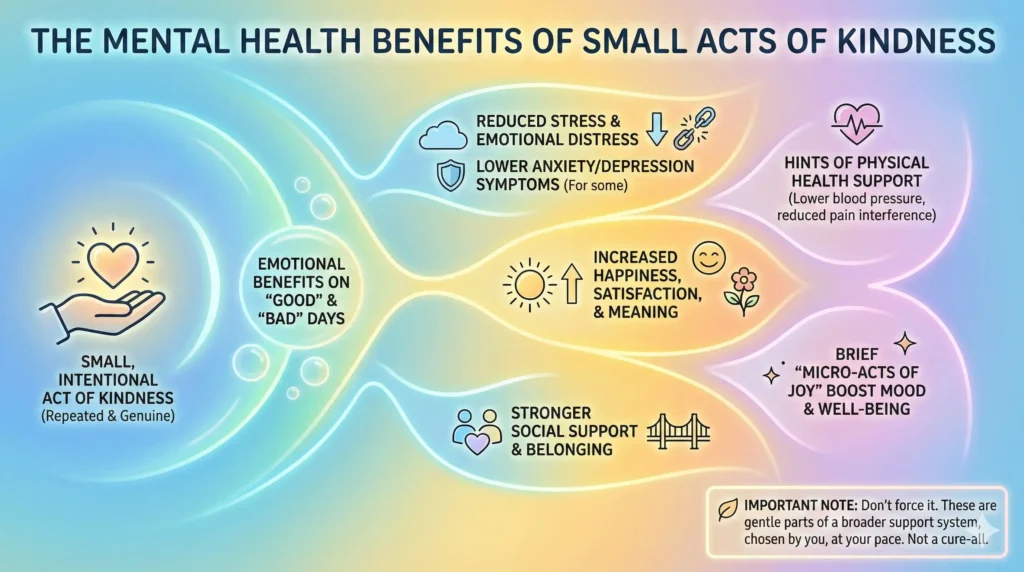
Across many studies, repeated, intentional acts of kindness are associated with emotional benefits on both easier and harder days. Research has linked kindness with:
- Reduced stress and emotional distress
pcom.edu - Lower symptoms of anxiety and depression for some participants
osu.edu - Increased happiness, life satisfaction, and sense of meaning
dbmi.columbia.edu - Stronger feelings of social support and belonging
psych.ubc.ca
There are also early signs that kindness may support physical health. Some studies link helping others and self-compassion practices with lower blood pressure, reduced pain interference, and markers associated with lower stress. Even brief “micro-acts of joy” have been connected to better mood in large international samples.
apa.org
This does not mean kindness should be forced, or that something is wrong if it does not noticeably change your symptoms. It simply suggests that small, sincere acts of care—chosen at your pace—can be one gentle part of a broader support system.
pmc.ncbi.nlm.nih.gov
21 small acts of kindness for anxious days
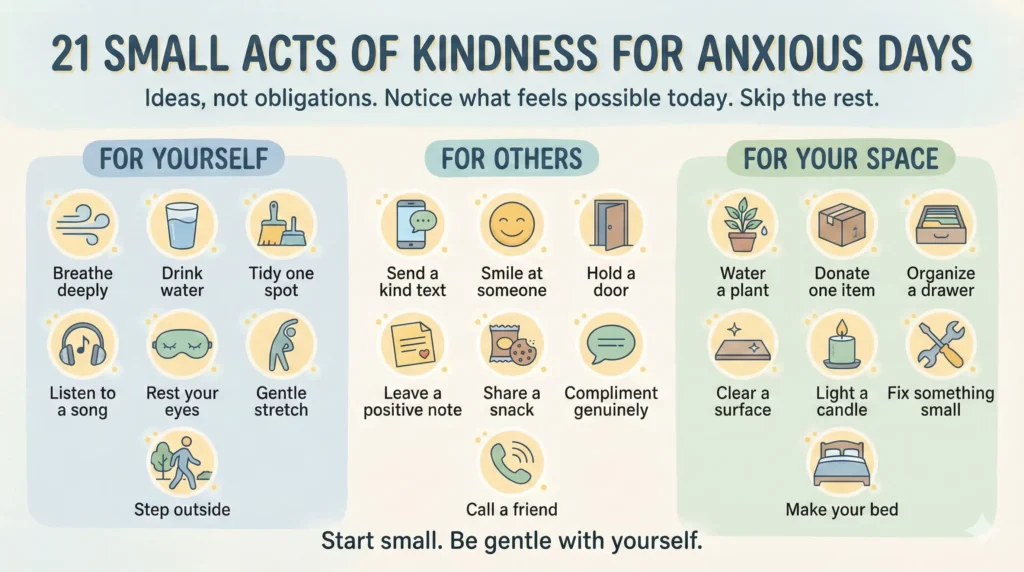
These are options, not obligations. Take what feels possible today and leave the rest.
mentalhealth.org.uk
1. Kindness from your couch
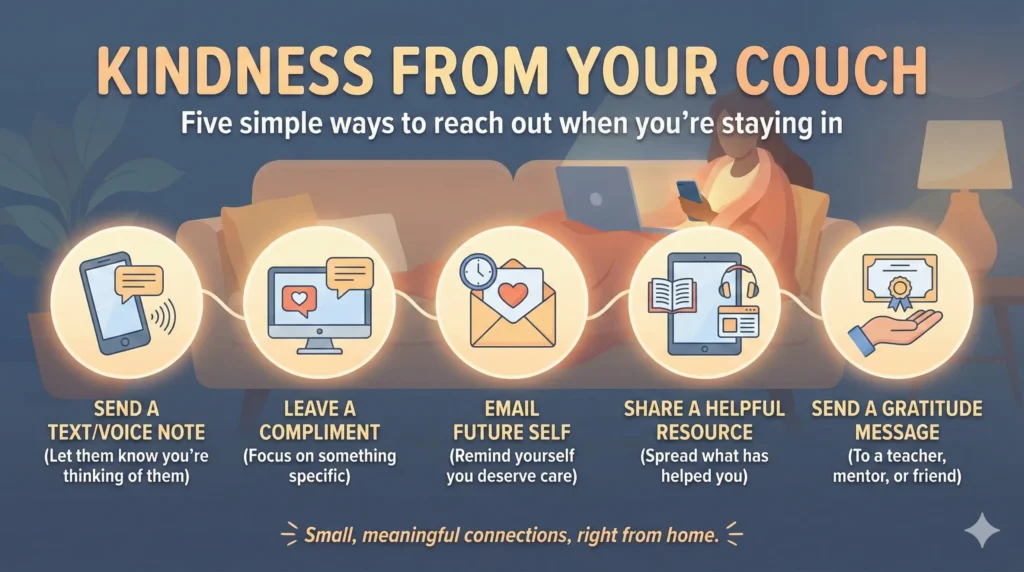
On days when leaving home feels like too much, connection can still happen in small ways.
greatergood.berkeley.edu
- Send a brief supportive text or voice note to one person
osu.edu - Leave a genuine, specific compliment on someone’s post or message
abundancetherapycenter.com - Email your future self a reminder that you are doing your best
kindnessrx.org - Share a calming resource that has helped you
mentalhealth.org.uk - Send a gratitude message to someone who has supported you
mqmentalhealth.org
2. Everyday kindness while running errands
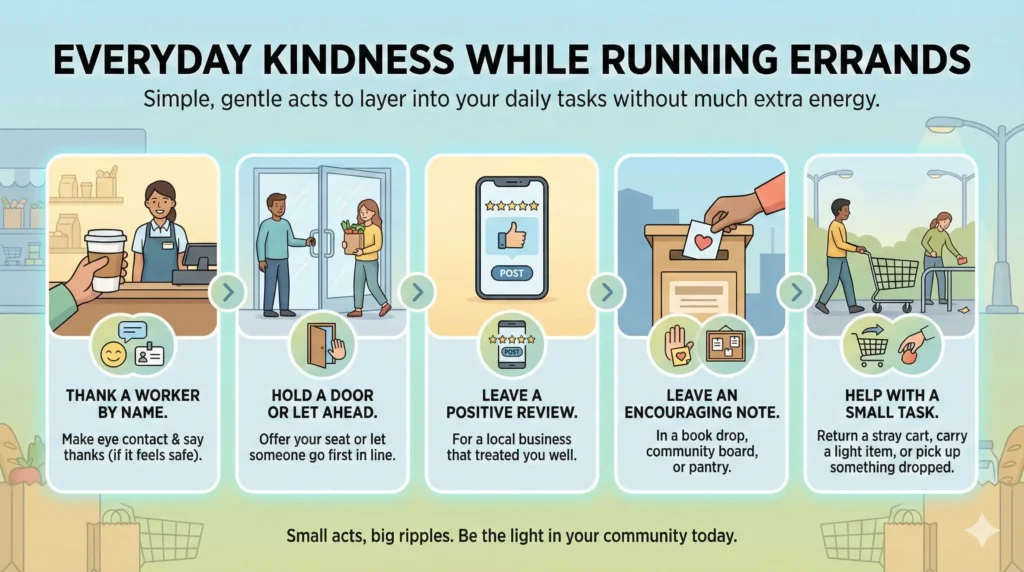
If you are already out, kindness can be woven into what you are doing.
mayoclinichealthsystem.org
- Thank a cashier or service worker by name
apa.org - Hold a door, offer your seat, or let someone go ahead
bbc.com - Leave a short positive review for a local business
abundancetherapycenter.com - Place a kind note on a community board or pantry
pmc.ncbi.nlm.nih.gov - Return a stray cart or pick up something someone dropped
mayoclinichealthsystem.org
3. Quiet kindness for low-energy or chronic pain days
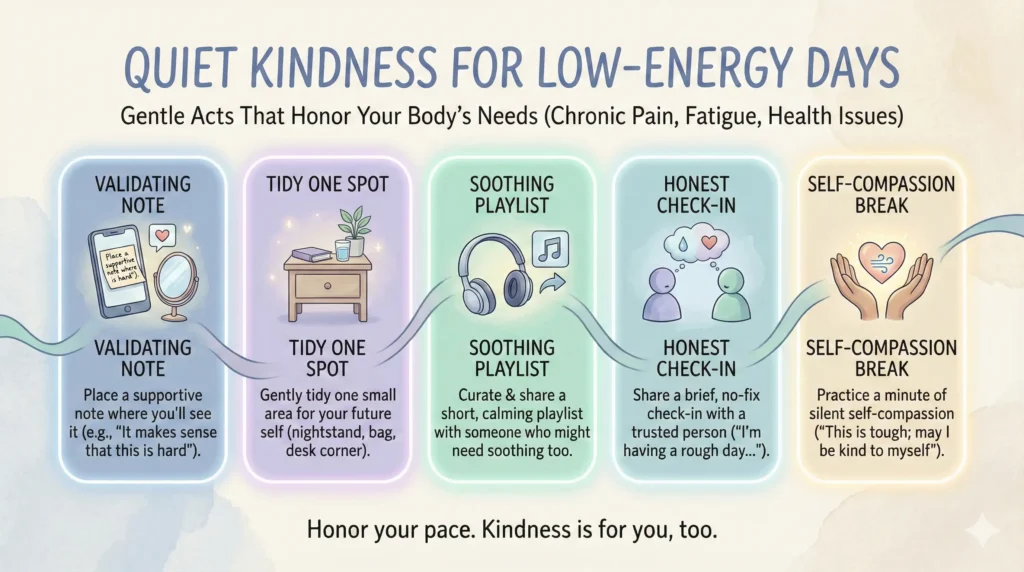
When your body is already under strain, kindness needs to respect that.
pmc.ncbi.nlm.nih.gov
- Place a supportive note where you will see it daily
balancedminds.com - Tidy one small space for your future self
dbmi.columbia.edu - Create a short calming playlist and share it
dbmi.columbia.edu - Send a simple check-in to someone you trust
pmc.ncbi.nlm.nih.gov - Practice one minute of self-compassion
pacmh.org
4. Community and global kindness
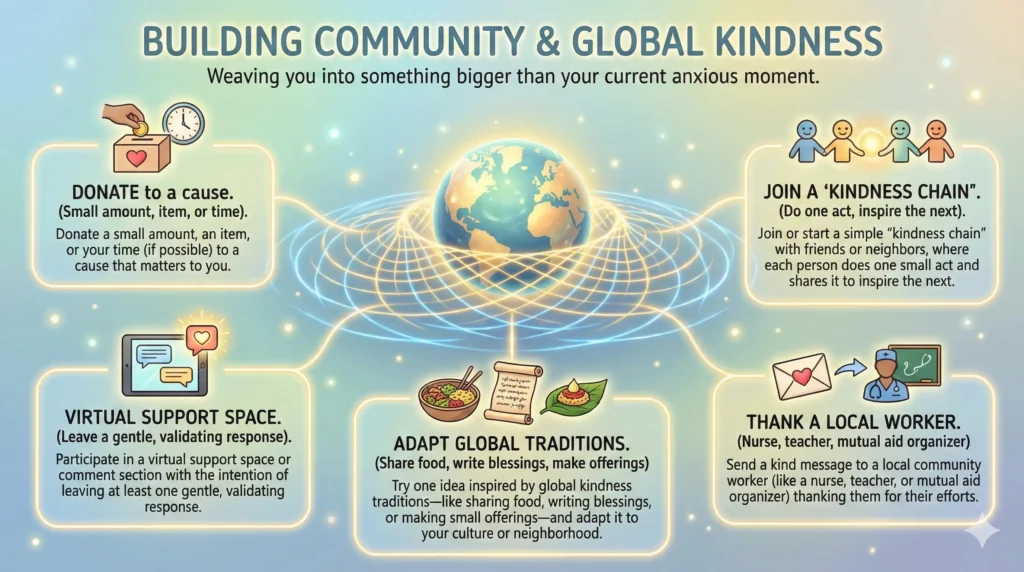
Kindness can connect you to something larger than the moment you are in.
rituals.com
- Donate a small amount, item, or time if possible
pmc.ncbi.nlm.nih.gov - Leave a validating comment in a support space
texashealth.org - Adapt a global kindness tradition to your own culture
theyachtweek.com - Thank a local community worker
apa.org - Start a simple kindness chain
news.byu.edu
5. Kindness toward yourself
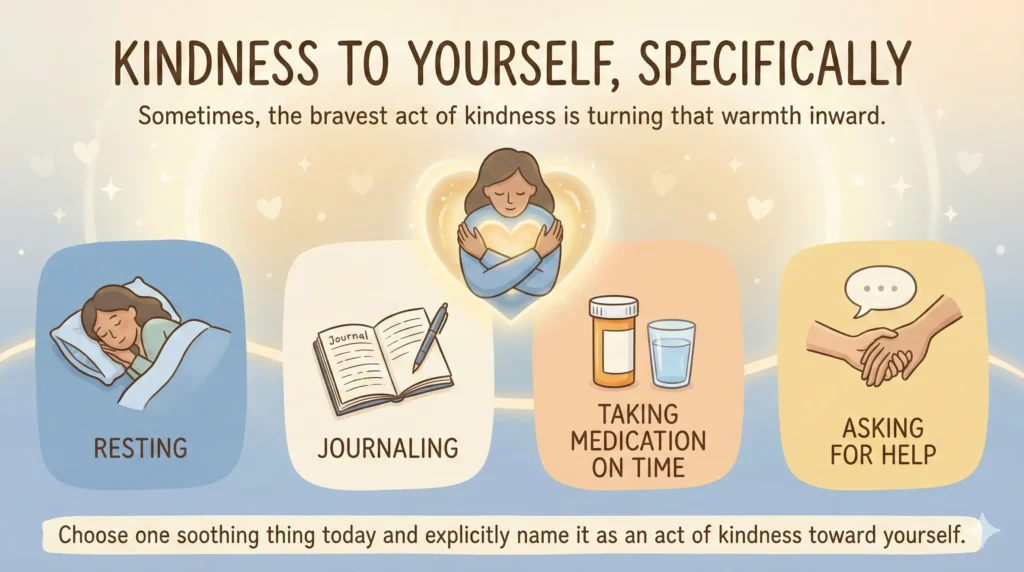
Sometimes the hardest kindness is turning care inward.
balancedminds.com
- Choose one soothing or supportive action today and name it as kindness
pcom.edu
Turning kind moments into a gentle habit
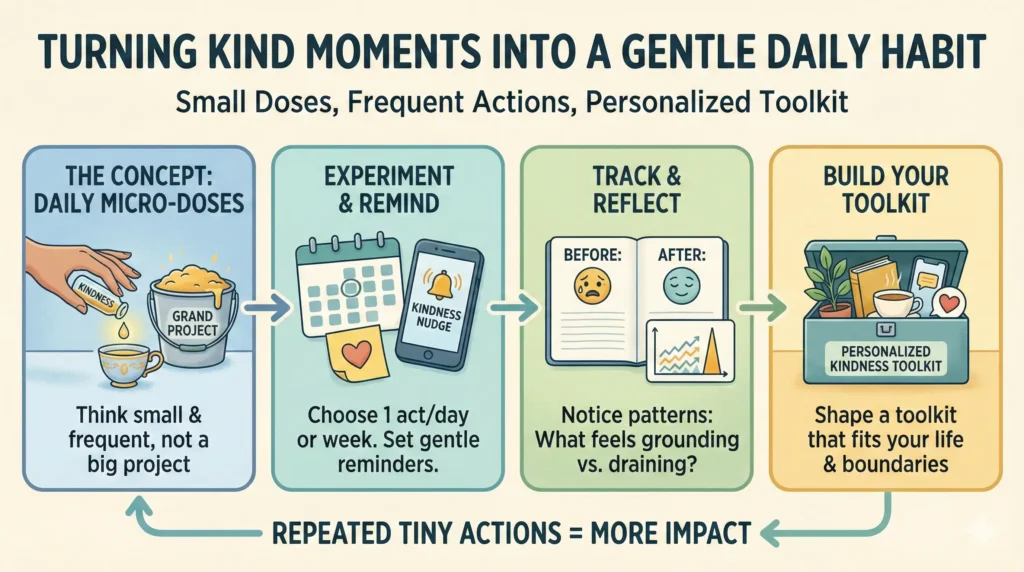
Kindness works best in small, repeatable moments. Research on micro-acts of joy suggests that frequent, low-effort actions may have more impact than occasional intense efforts. Some studies show that a few kind acts each week can reduce anxiety and depression symptoms.
nhs.uk
You might choose one small act per day—or per week—based on your energy. Some people use gentle reminders or keep brief notes about what helped, not to judge themselves, but to notice patterns over time.
cdc.gov
Practicing kindness without burnout
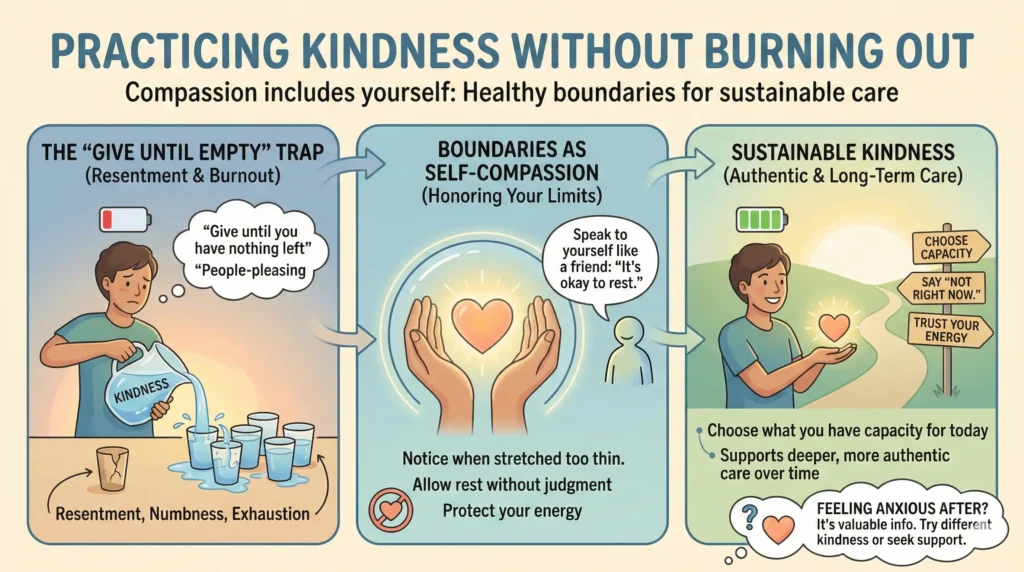
Kindness does not mean giving until you are exhausted. Healthy boundaries are part of real care—for others and for yourself.
healthymindstherapy.com
Self-compassion means noticing your limits, allowing rest, and speaking to yourself with the same understanding you would offer a close friend. From this place, kindness becomes more sustainable and less draining.
mentalhealth.org.uk
If certain acts increase anxiety—especially social ones—that is useful information. You may benefit more from private or self-directed kindness, or from additional support for social anxiety.
sciencedirect.com
When kindness is not enough
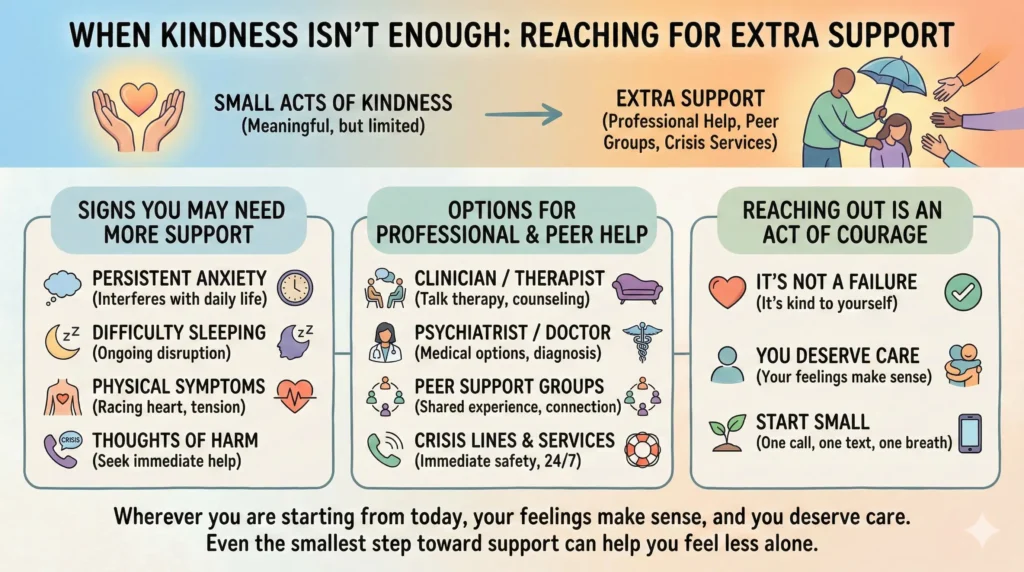
Sometimes anxiety is intense or persistent enough that extra support is needed. Signs include ongoing distress, sleep problems, physical symptoms, or thoughts of self-harm. Reaching out for professional help is not a failure—it is an act of care.
nhs.uk
Options may include a primary care clinician, therapist, psychologist, psychiatrist, or peer support group. If you feel unsafe, crisis lines and emergency services exist to help keep you safe.
cdc.gov
Wherever you are today, your feelings make sense. Even the smallest kind act—one gentle thought, one message, one steady breath—can remind you that you are not facing anxiety alone.
psychiatry.org